
If you’ve already made your way through our fall garden checklist, congratulations! However, late fall brings a few additional demands to prepare your landscape for winter. With just weeks to go before the snow arrives for good, here’s what to prioritize in your yard—and what you can cross off your list for good!
Make sure to add these often-overlooked tasks to your late fall maintenance routine!
While larger, established evergreens make for lovely winter colour, highly-exposed evergreen shrubs, broad-leaved evergreens like rhododendrons, and newly-planted conifers can be highly vulnerable to winter burn. This condition, caused by dry air and freezing winds, causes patches of your evergreens to die off, leaving burnt growth that won’t easily bounce back.
To prevent winter burn, wrapping vulnerable evergreens is essential. Before wrapping, create a frame of tall, sturdy stakes around the tree or shrub in question while the ground is still soft. (Aim to do this after a rainfall, which will help the stakes slide in with less resistance.) Tie the stakes together at the top, so the frame forms an “A” shape. Then, staple burlap along the outside of one stake and wrap around the entire frame until the evergreen is covered. Staple the burlap in place to secure.
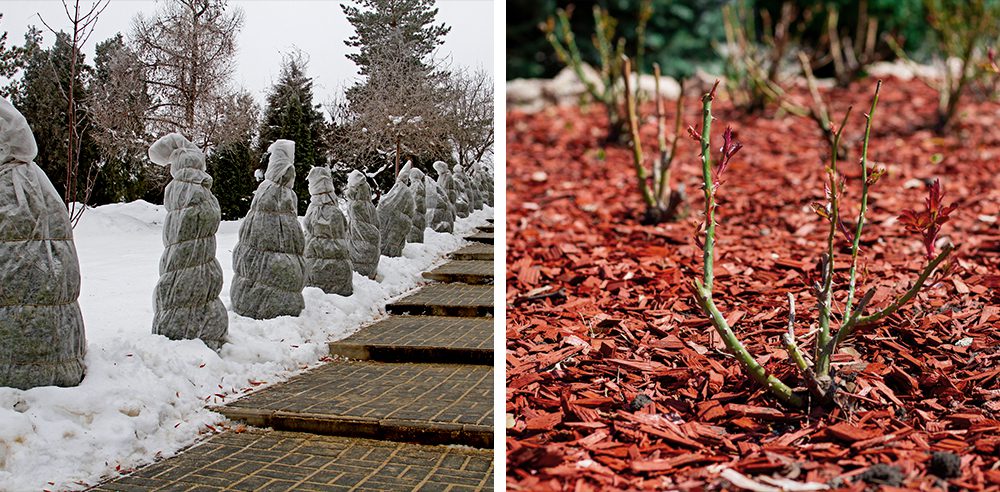
Your roses will fare much better over the winter with a little extra TLC. The delicate graft (the bulge at the base of the branches) does best when well-protected from freeze/thaw cycles with a nice mound of soil. Use a rose collar to add additional protection from the elements.
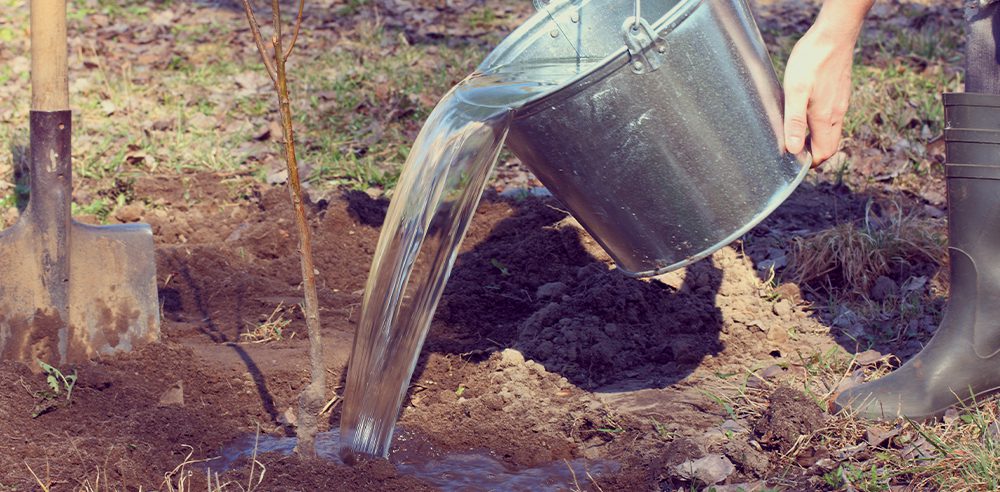
Even though your plants have stopped growing and started preparing for dormancy, it’s not time to stop watering just yet! Now is a critical time to get your trees, shrubs, and hardy perennials well-hydrated—their best defence against the harsh elements. Every 7 to 10 days, give every plant a long, deep soak by letting the hose run at the base for 30-45 minutes for larger, more mature plants and 10-15 minutes for medium-sized shrubs. These infrequent, deep soaks are much more effective at helping your plants stock water than daily surface watering. Continue to water this way until the ground has frozen.
Pruning is pretty time-sensitive, and not all plants are ideal to prune now. From now and into winter, you can prune dogwood, summer flowering shrubs, as well as yew, spruce and cedar. The trick with evergreens, or really any pruning at this time of year is to be careful not to go back too far, as you want to leave quite a bit of living tissue and buds in case there is winter dieback on the tips.
You might be surprised by how many of these fall chores you can (and should) skip!
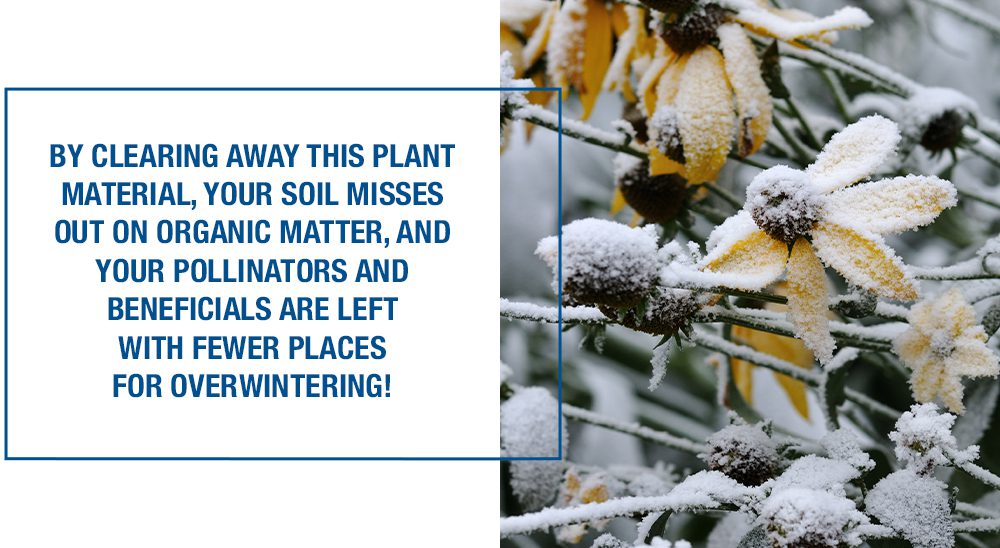
While the old wisdom has traditionally been to cut back spent perennial leaves and stems after they’ve died back, we’re now realizing this practice does more harm than good. By clearing away this plant material, your soil misses out on organic matter, and your pollinators and beneficials are left with fewer places for overwintering! This year, leave perennials where they are. You may be surprised by how much-added interest your landscape will have in the winter!
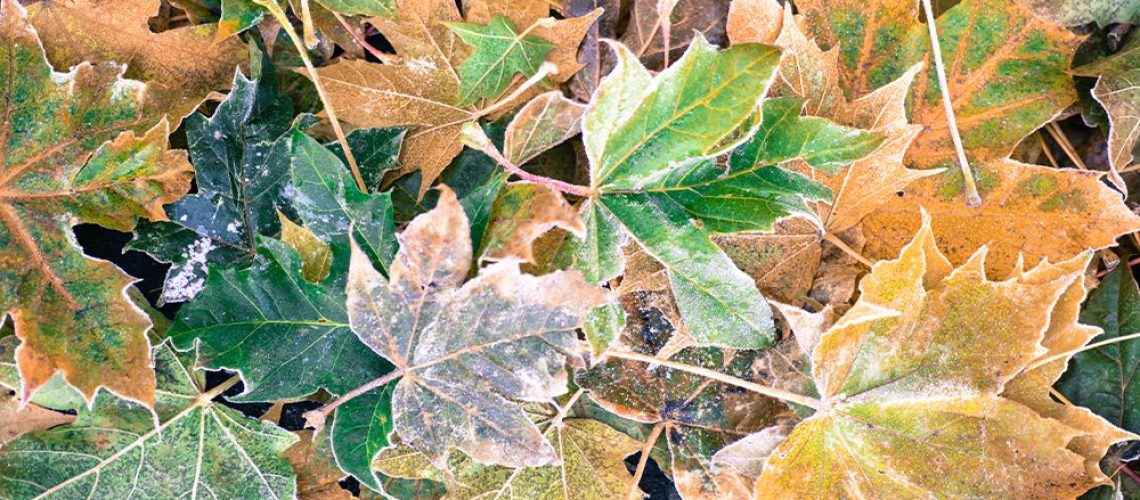
I’m not suggesting you leave a full tree’s worth of foliage sitting on your lawn (that could be problematic to deal with in the spring!), but you may want to cut back a bit on the raking this year. Use leaves as free mulch on your garden beds, leave a few small piles in odd corners, and don’t obsess over clearing every single leaf from your front lawn. Not only do important pollinators and beneficial critters rely on leaves for winter shelter, but the organic matter is also excellent for improving soil quality and insulating your beds. Plus, your body will thank you for the extra rest!
While applying fall fertilizer (and only fall-specific fertilizer formulas!) to your lawn in November is highly beneficial when springtime arrives, now is not the time to use synthetic liquid fertilizers on your garden plants. The surge of nutrients can throw off their growth cycle, causing them to surge with new growth when they should be preparing for dormancy. This new growth is not only vulnerable to cold weather, but it makes the whole plant more susceptible to winter damage overall. If you want to improve nutrients in the soil, just add a little compost or slow-release granular fertilizer.
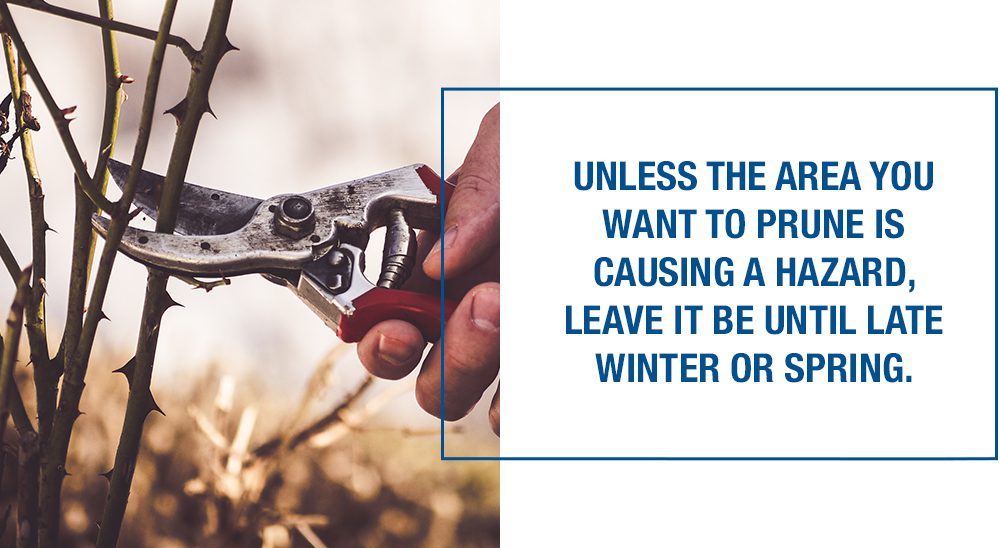
As I mentioned earlier, pruning is time-sensitive. Some plants should simply be left alone until the snow melts, like fall-blooming and spring-blooming shrubs. Fall-blooming shrubs should be pruned in late winter or spring, and spring-flowering shrubs should be pruned immediately after they’ve stopped flowering next year. Unless the spring or fall-blooming plant you want to prune is causing a hazard, leave it be for now!
Another common mistake is to over-mow your lawn in the late fall! If your grass is looking unruly now, get your last mow of the year done as soon as possible. The ideal length to leave the lawn is about 2.5 – 3 inches, but if it’s just a little longer, just leave it! Grass is also a plant, and late fall isn’t the time for your lawn to be using resources to bounce back from the lawnmower. Better to leave the lawn a touch long (the good bugs will thank you!) than to keep it too short.
For more tips on preparing grass for winter, read through our article on fall lawn care.
If these fall landscape maintenance tips have left you with more questions, visit us in-store at Royal City Nursery! We’re open all year to help you keep your landscape radiant through every season.