
It’s time to begin our fall landscape maintenance in preparation for the big winter snow dump! Our resident landscaping expert, Tanya Olsen, has plenty of tips to share, so we’re rolling out a series of fall landscape care tutorials to help you cover all the bases. In the first installment of our series, Tanya has shared her fall yard and landscape maintenance checklist—essentially, everything you need to do before you begin lawn care and major pruning.
You’ll want to accomplish a few tasks this fall before winter arrives, or else you’ll be left with a big mess once the snow melts! Cross these four tasks off of your checklist this month to get started on your complete fall lawn and landscape maintenance.
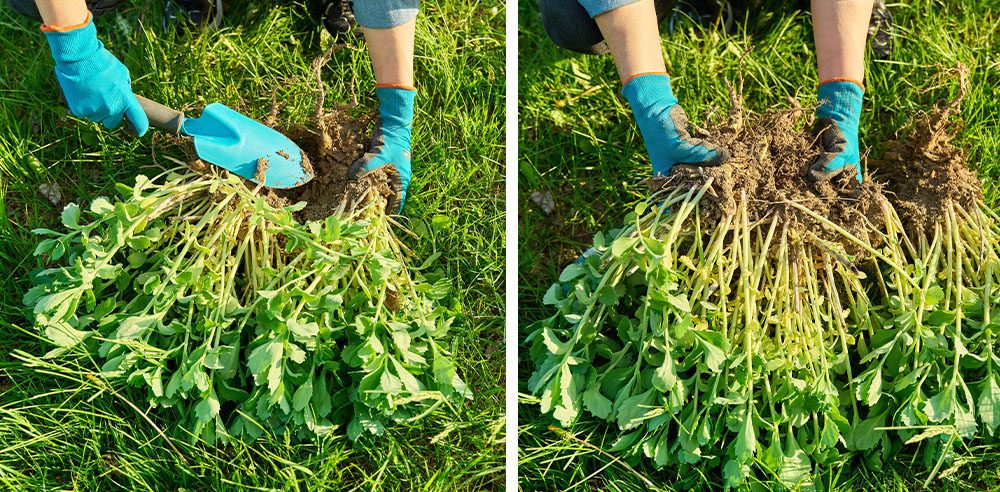
Perennials spread and grow each year; eventually, their roots get crowded. Crowding often results in the middle of your plant dying out, resulting in a doughnut shape. Ideally, you’ll want to divide your perennials one year before they go into doughnut mode. Things like ornamental grasses, irises, peonies, and daylilies will benefit from division every few years, as they tend to spread quickly.
To divide your perennials, Tanya suggests spreading out a tarp so you can safely lay down the entire plant and root ball without making a mess. Use a sharp shovel or spade to dig up the entire plant or as much of the roots as you can.
When splitting the root ball into several smaller pieces, Tanya recommends looking at it like an old, sprouting potato.
“Potatoes have eyes—those are the nodes where all the growth starts to happen. Your perennials are going to have eyes in the same kind of way. So, as long as you’ve got at least two eyes per piece, you’re good to go. As you cut it up, make sure you take that middle section that was dead or overgrown and get rid of it. Ultimately, you’re cutting up that middle set or the outer ring into smaller pieces.”
Take half of your divisions and plant them back into their original holes, then take the other divisions and plant them elsewhere in the landscape, or share them with your neighbours! Apply fertilizer when you plant to help encourage the roots to spread and establish. Water generously once per week until the frost.
For a little extra spring colour, Tanya recommends tossing in a few spring-blooming bulbs into the holes while you replant your divisions. We’ve got plenty of gorgeous varieties available now in our fall pre-order catalogue!
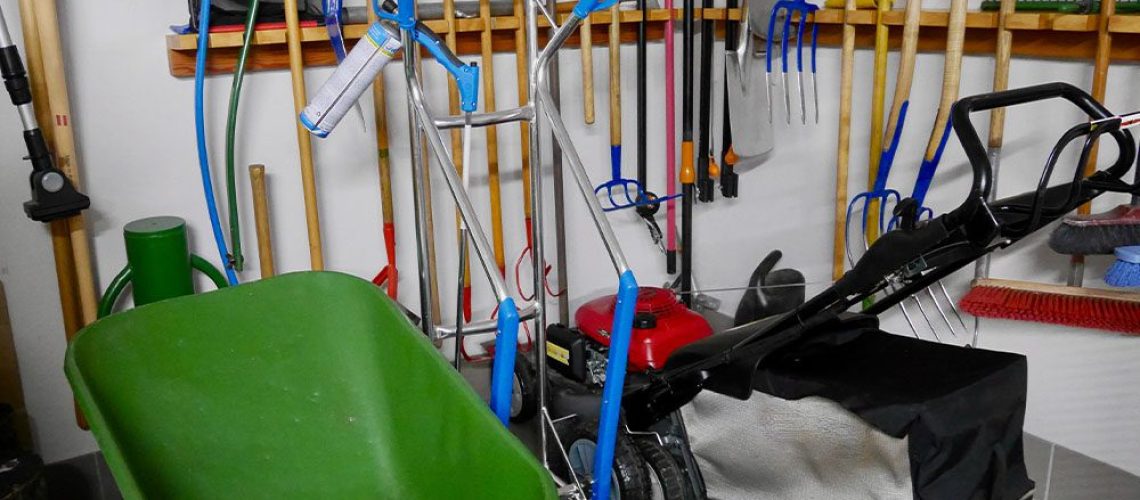
Storing your tools safely in the garage for the winter is important. As Tanya says, the last thing you want is a rake bonking you on the head! Find a dry place to store them, and sanitize them thoroughly before you put them away.
Tanya also recommends taking apart your pruners and other tools with moving parts and giving them some oil. You can find oils explicitly made for pruners, and sewing machine oil can also work. You’ll want to use something thinner than WD40—that formula is a bit too thick and gummy.
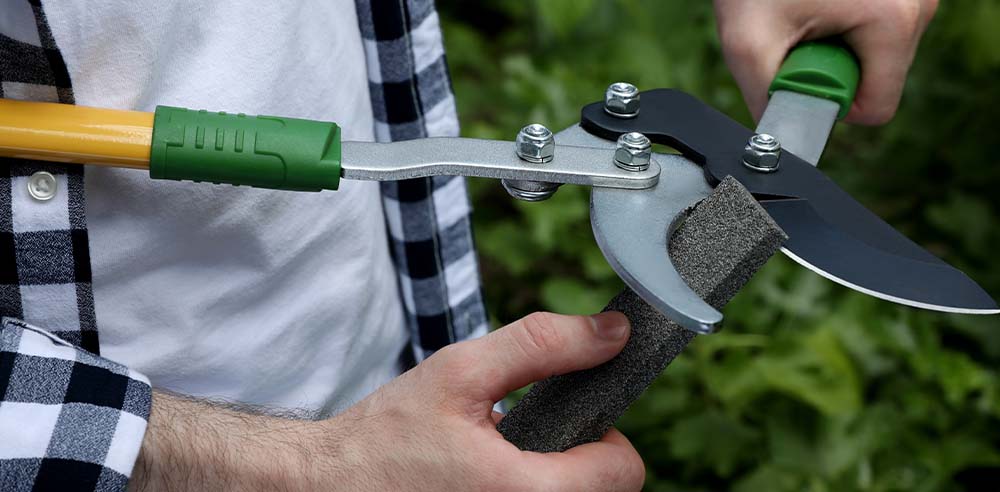
You can sharpen your tools in fall or spring after you’ve cleaned them. However, Tanya says it’s important to identify the kind of blades so you can sharpen them properly. Some pruners have a single edge, while others have a double edge. The double-edged pruners are gentler on your plants and make cleaner cuts, but if you sharpen them improperly, you could lose that double edge. Feel free to drop into Royal City Nursery with your pruners and ask Tanya for advice on proper sharpening if you’re unsure how to proceed!
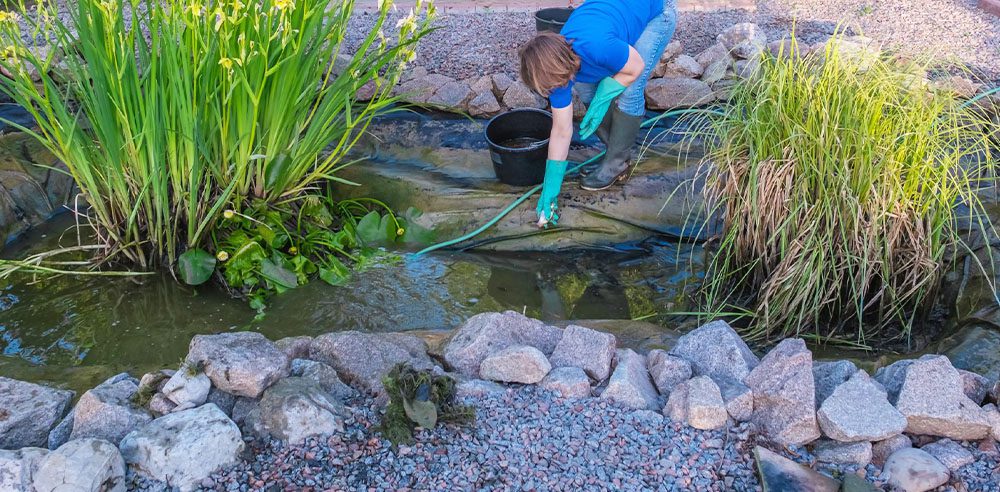
If you’ve got a birdbath with standing water or a tabletop fountain, you’re better off bringing them inside for the winter. Drain them, bring them inside, clean them up, and store them safely.
If you have a pond or fountain with a pump that doesn’t run 24/7, you’ll want to take out the pump, clean it, and store it indoors until spring. Don’t allow the seal on the pump to dry out, as this can cause it to shrink, and it won’t work as well down the road. Tanya recommends storing it in a bin full of water to prevent drying.
Guelph is notorious for hard water, so it’s common to find limescale buildup on your water pumps. A cotton swab dipped in alcohol is a simple tool for dealing with crusty lime.
For ponds and fountains with filters that are always running, the best cleaning method depends on the kind of system you have. Some are easy to take out completely, while others contain filters you can remove, clean, and swap out. Cleaning the filter in fall is essential so that all the gunk that has built up over spring and summer doesn’t sit there all winter long.
In terms of long-term maintenance for ponds with plants and fish, Tanya says you should view it as its own ecosystem. Don’t expect instant results or quick fixes for keeping it clean—look at the big picture and make choices to support the overall health and sustainability of the ecosystem.
Instead of adding chemicals into your pond to keep it clean, Tanya has a much more eco-friendly solution:
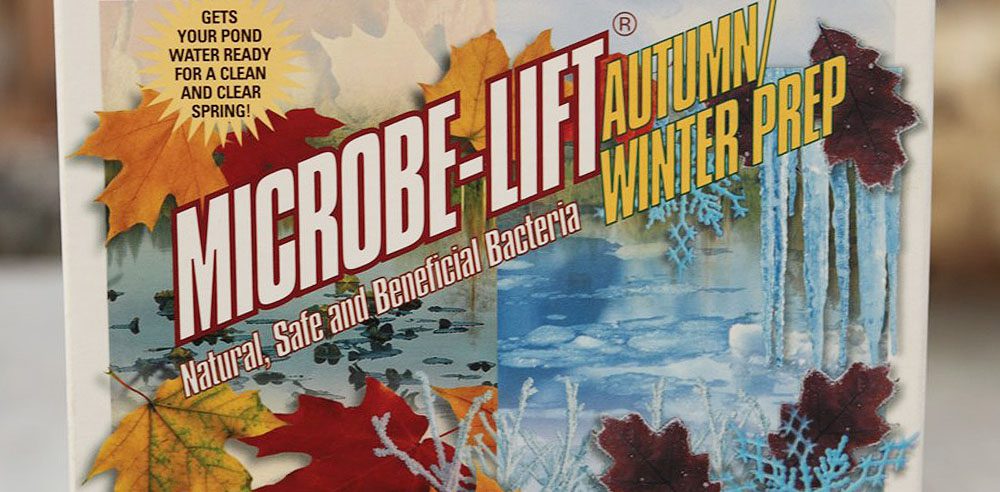
“We add a product called Microbe-Lift. I do that with the spring and summer versions, but there is a fall version that’s actually really good. If you’re not going to do anything to your pond or water feature, this is the only thing you need to do.
Microbe-Lift is made from bacteria that actually feed on algae. There are two different enzymes in there. One is a package and the other is a powder that you sprinkle in. Both of them contain bacteria that are specifically made for cold water. They help to break down all the leaves and junk that’s in the bottom of your pond. So, when you open it next fall or next spring, you’ve got far fewer problems.”
Microbe-Lift is especially useful if you have fish that are overwintering in your pond. It balances the pH levels of the water and coats their gills!
It used to be standard practice to cut back all of the perennials in our landscape every autumn before the snow falls. Nowadays, in our efforts to be more eco-friendly, we’re taking a more mindful approach to landscape cleanup.
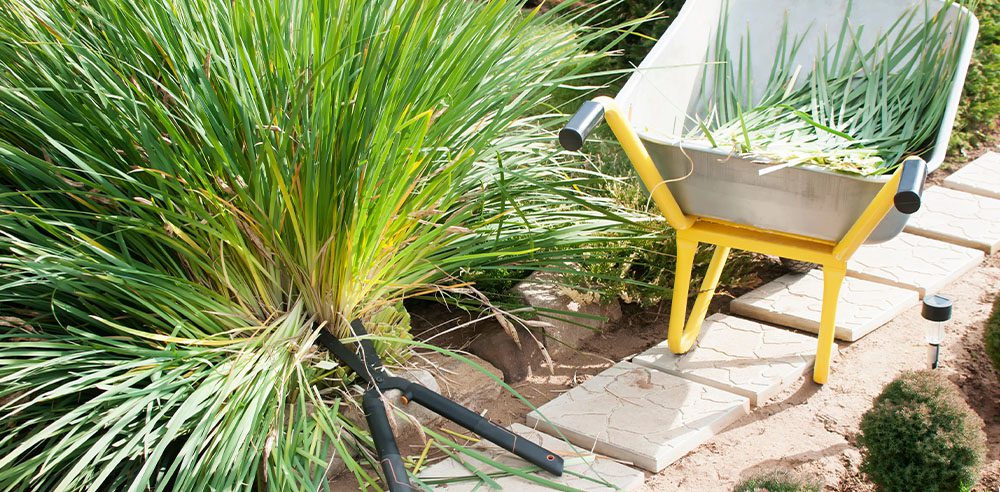
For perennials like hostas, grasses, and coneflowers that get slimy leaves and break down in the snow, Tanya definitely recommends cutting those back. However, perennials like black-eyed Susan’s and clematis can stay up. These provide shelter for hibernating pollinators like bees, and creating a haven for pollinators will certainly benefit your spring garden the following year! The bees won’t have to go far to find flowers and food.
If there are perennials in your landscape and you’re unsure whether or not to cut them back, feel free to ask Tanya at the garden centre! She’ll let you know what can stay and what needs to go.
If you have several mature trees in the landscape that have dropped a large amount of leaves, you should rake them up and bag them. However, if there’s a minimal amount of leaves on the ground, you can just leave them! Again, it provides shelter for pollinators, and it will not hurt your landscape if there are a few leaves here and there.
Stay tuned for future installments of our fall landscape care series! Tanya will share even more of her expert tips on lawn care, pruning, and every other essential task for Ontario fall landscape maintenance.