

Fall has officially arrived—isn’t it beautiful? Here at Royal City Nursery, we’re beyond excited for this special season. We have fall decor coming out of our ears, from pumpkins and ornamental corn to straw bales and scarecrows. I think you’d agree that there’s so much to love about fall—cooler weather, warmer beverages, and the return of cozy sweaters and hearty soups. Yet, there’s also a whole lot of chores to get done in the yard, some that bring instant gratification (hello, shrubs!) and others that won’t truly reward us until the spring.
Luckily, it’s the perfect weather to put in a little elbow grease in the garden. Here’s your checklist for fall garden maintenance, planting, and more in Southern Ontario!
First, let’s tackle the garden beds. In the fall, the goal of garden bed maintenance shouldn’t necessarily be to leave them spic and span. Instead, we just need to take out what we don’t want, leave behind the beneficial stuff, and add a little compost to feed the soil and tidy up the overall look. Examples of things you might want to remove include:

With that said, things like leaf litter and bits of spent flowers or fruit don’t need to be removed. They’re great for the soil! Leave them be and top-dress with a few inches of compost to add more nutrients to the bed and smooth out the look. In fact, I like to leave some spent perennials standing, such as coneflowers and ornamental grasses. The birds love the seeds, beneficial bugs use them for shelter, and they carry some lovely interest into the winter garden.
Now that your beds are looking beautiful, you can start on my favourite task: planting! Fall is ideal for planting trees, shrubs, and of course, fall bulbs. It’s also not too late to get some perennials in the ground, but don’t wait too much longer!
When it comes to bulbs, there’s a bit of an art to planting them because it’ll be a very long time before you’ll see the final look. One of the often-overlooked tricks to bulb planting is paying attention to the bloom dates of each bulb. For example, if all of your bulbs are late spring bloomers, your garden will seem to take an eternity to bloom, followed by a short burst of colour. What you probably want is a show of early spring blooms, followed by a symphony of flowers that lasts up until early summer.
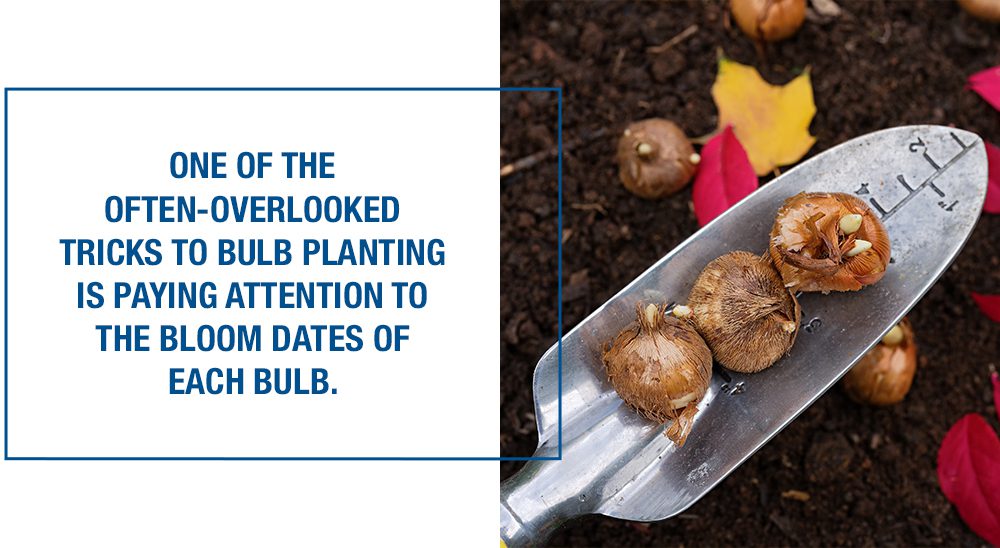
To achieve this, try the technique of lasagna layering. This involves planting bulbs in layers, with the latest-blooming bulbs lowest in the ground, then mid-spring bloomers a little shallower, and early spring bloomers closest to the surface. Pay attention to the bloom dates when buying your bulbs to determine where in your “lasagna” that bulb should go. You can also use this technique with containers to create living spring arrangements—just make sure to mulch well and keep your containers somewhere well-protected, like a shed or garage through the dead of winter!
If you thought you loved sweater weather, shrubs and trees really love it. It’s not too hot or too cold, perfect for setting strong roots. This is a great time to fill up those bigger spaces that seem a little empty in your yard. Make sure to apply a generous layer of mulch over new plantings to protect them from the cold and keep moisture in.
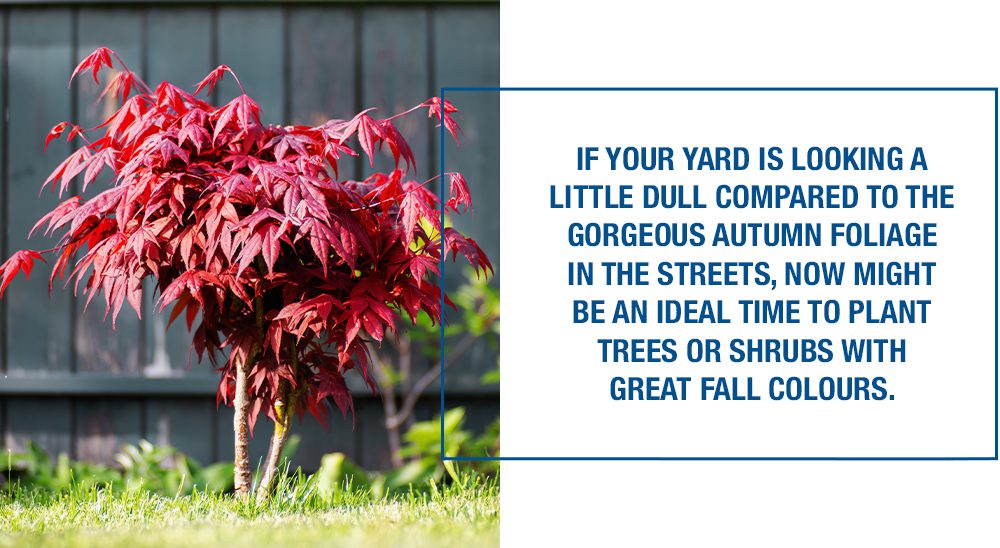
If your yard is looking a little dull compared to the gorgeous autumn foliage in the streets, now might be an ideal time to plant trees or shrubs with great fall colours. Japanese maples and most varieties of spirea are two fabulous options for giving your landscape some punchy colour and pretty shapes in the fall. Remember, you’re also planting for winter interest now, so planting some evergreen shrubs and trees will benefit your yard when everything is blanketed in snow.
Fall lawn care is its own category of tasks, from maintaining your mower to adding fertilizer, and of course, all that raking! For a detailed guide to taking care of your grass this season, I recommend reading our fall lawn care guide.
If you’re lucky enough to have a water feature, it will need a little TLC this season. Closing your water feature now is crucial for helping it look great and function smoothly next year!
If you have fish that need to overwinter indoors, it’s time to move them inside. Make sure to use the pond water when bringing them into their indoor homes, so the transition isn’t too drastic. If your fish will stay outdoors, it’s crucial to have a pond bubbler or something similar in place to keep the water from freezing over. Just about every water feature with live fish has its own needs and procedures for overwintering (depending on the microclimate, fish species, and other factors!), so do a little research or talk to an expert if this will be your first winter.
Once you’ve made arrangements for your pond’s tenants, time to start cleaning! First, siphon out about 30% of the water. Use a skimmer to collect any debris you can easily scoop out, then blast the stuck-up stuff with a hose. Then, use a pond vacuum or net to remove the remaining debris from the pond. Finish with a water conditioner to neutralize chlorine and other harsh chemicals in the water. Finally, cover the pond with a net to prevent debris from getting back into your newly cleaned water feature. Now may also be a good time to cut back hardy plants to just above water level, and start moving tender aquatic plants indoors.

In late October, make sure to clean your pump well. If you have fish to keep alive through the winter, the pump will need to be reinstalled afterward. If your pond is empty, store the pump inside your home during the winter. This will make sure it’s in great working order when it’s time to reopen next year!
Finally, one of the most forgotten steps to fall garden maintenance: watering your trees and shrubs. Now is a crucial time for deep watering, which allows trees and shrubs to store water for the harsh weather ahead. Rather than a light daily watering, run the hose on each shrub and tree for about 30-45 minutes once per week. This will ensure plenty of water has had a chance to reach the root system. When the soil begins to freeze, the moisture will freeze around the roots, insulating them and providing a water source during those early freeze-thaw cycles.
Now that you have the know-how, you’ll likely need some tools and supplies! Royal City Nursery is open all year ‘round, so don’t hesitate to stop in for your fall plants, fertilizers, and more.