

It’s seed-starting season! Before diving into the details of what to sow and when, Tanya is here to decode the back of every seed packet. Discover why taking the time to read this essential information can make all the difference for your gardening success! Tanya Olsen, third-generation owner of Royal City Nursery and Professor in the Horticulture Apprenticeship program at Humber College, shares her expert advice on understanding seed packets to set your garden up for success.
Check out our YouTube video on ‘How To Read A Seed Pack’ (4 minute watch) or scroll to continue reading.

Understanding the “days to harvest” on your seed packet is crucial for a successful growing season—don’t overlook it! This number tells you how long it takes for the plant to mature and produce its harvest from the date the seed is sowed. For example, radishes typically have a “days to harvest” of around 24 days (depending on variety), while tomatoes take roughly 70 days. That’s a huge difference!
Knowing this information allows you to plan effectively by doing a bit of “backwards math.” Think about when the plant is usually harvested—for instance, tomatoes are typically picked in mid to late summer. Count back approximately 70 days from your desired harvest window, and that’s when you should sow your seeds. To achieve an earlier harvest, start vegetables with longer growth periods (high “days to harvest” numbers) indoors a few weeks ahead of time.
This is especially important for crops that require a longer growing season, like squash or peppers. By starting seeds at the right time, you ensure the plants have enough time to mature and provide you with a bountiful harvest before the growing season ends. Don’t skip this step—it can make or break your gardening success!
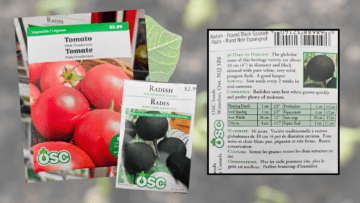
Sowing instructions are little golden nuggets of wisdom! These guidelines are tailored specifically to the plant or variety in your seed packet and are key to setting your garden up for success.
For example, on the back of a radish seed packet, you’ll often see advice to sow seeds every few weeks starting in early spring or very early summer. Why? Because radishes thrive in cooler weather and don’t tolerate heat well. As a cool-season crop, radishes can be started quite early in the growing season. By sowing seeds every couple of weeks (a practice called succession planting), you’ll enjoy a steady, continuous harvest rather than having all your radishes ready at once.
This section provides details tailored to the specific plant and variety you’re growing. It’s where you’ll find valuable insights such as the plant’s soil preferences, watering needs, and any special growing requirements. Taking the time to read and understand this information can make a big difference in your gardening success.
For instance, most seeds thrive in even, consistently moist soil. As a general rule of thumb, avoid letting your soil dry out completely, as fluctuating between dry and wet conditions can confuse seeds and disrupt germination. Inconsistent moisture can cause seeds to fail altogether—essentially, they “give up” before sprouting! Keep in mind that constantly wet seeds and soil can lead to problems. Excess moisture may encourage mold growth on the soil’s surface or cause a condition called “damping off,” where seedlings rot at the base of the stem and collapse.
Some plants may also have unique requirements, like needing specific soil pH levels or amounts of sunlight, so be sure to follow these instructions carefully. This attention to detail will set the stage for strong, healthy growth right from the start.
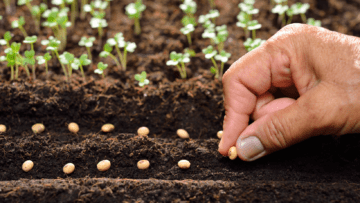
This section on the seed package outlines exactly how deep to sow your seeds in the soil, which is essential for successful germination. For example, radish seeds should typically be planted less than a quarter of an inch deep—just enough to cover them with a light layer of soil. Tomatoes, on the other hand, are usually planted a quarter inch deep, slightly deeper than radishes. These small differences in depth are important, as planting too shallow or too deep will affect how well seeds sprout.
Seed spacing is equally important and varies between plant varieties. This tells you how many seeds to sow and how far apart to place them, ensuring each plant has enough room to grow and thrive. Overcrowding can lead to competition for resources like water, nutrients, and sunlight, which can ultimately reduce your harvest.
By following these guidelines, you’re giving your seeds the best possible start—whether you’re sowing tiny radish seeds or larger, more demanding crops like pumpkins or sunflowers. Paying attention to planting depth and spacing is one of the easiest ways to set your garden up for success!
What does the term “thinning” or “thin-to” mean? You’ve probably seen it mentioned on the back of your seed packet. Thinning refers to the process of spreading out or removing some seedlings after they’ve sprouted to ensure there’s enough space for the remaining plants to grow and thrive.
While seeds may start off small, they grow quickly, and as they mature, they need room to develop strong roots and healthy foliage. Without adequate space, seedlings compete for resources like sunlight, water, and nutrients, which can stunt their growth and reduce your harvest.
To thin your seedlings, simply wait until they’ve sprouted and reached a manageable size, then carefully remove or transplant the extras, leaving only the strongest plants spaced according to the instructions on your seed packet. It may feel counterintuitive to remove some seedlings, but it’s an important step for helping your plants reach their full potential.
Decoding the back of your seed packet is simple once you know what to look for and what the terms mean! Keep in mind that each plant and variety has its own unique needs, so always check the details before sowing and germinating your seeds. If you ever need help understanding the instructions or have any questions, our team of experts is here for you, both in-store and online. Happy planting!
About Tanya Olsen:
Tanya is a third-generation garden centre owner and landscape designer.
Teaches Horticulture Apprenticeship at Humber College in Ontario, Canada.
Has a weekly segment on CTV news.
Has a Bachelor of Landscape Architecture.
YWCA Woman of Distinction.
About Royal City Nursery:
Guelph, Ontario’s only third-generation, full-service garden centre! We specialize in creating custom outdoor living spaces and unique solutions for all your garden, landscape, and seasonal decorating needs! At our new greenhouse, located between Guelph and Cambridge, we are the garden centre of choice for discerning homeowners, landscapers, and designers.