For our final installment of the Fall Landscape Care series with Tanya Olsen, we’re covering all the essential steps to prepare your lawn for a new year. Whether you have a grass lawn that’s looking a bit patchy or you’re considering making the switch to clover, Tanya has plenty of valuable tips for setting up your lawn for a lush, green spring.
Make Time This Fall to Complete These Lawn Care Steps
During the cold winter and the hot summer, our grass gets brown and dry and goes dormant. In spring and fall, it’s actively growing again. As you’d expect, the care requirements change with each season, so there are some important things you should add to your fall chore list. With another snowy winter on the horizon, you won’t want to put these off for too long. Let’s get started!
Dethatching
Grass gets tangled and matted over time. Tearing up these tangles with the rake is essential! If it stays matted, it will be much more difficult for fresh new growth to emerge. Plus, if you’re planning on reseeding the lawn, dethatching will allow the grass seeds to reach the soil while you remove dead patches of grass. Apply pressure as you pull your rake across the terrain to rip up the gnarly bits, and you’re good to go! Step one: complete.
Aerating
Good news: you can probably skip this step. However, it’s still worth mentioning, as you should do it every few years. Aerating involves using a spike or plug aerator to create holes across the terrain, introducing oxygen and loosening compacted soil.
“Realistically, if you were on a city sports field that gets lots of foot traffic on a regular basis, then absolutely, you should aerate on a semi-regular basis. Most residential yards, however, don’t get that much use. So to me, it doesn’t make sense to do a lot of plug aerating,” says Tanya.
If you notice signs of pooling moisture or have a big family running around the yard a lot, then aerating may help. To prevent compaction without having to bring out the aerator, Tanya says you can wear cleats while you mow the grass. It doesn’t penetrate that deeply, but it does help!
Spread Fresh Soil
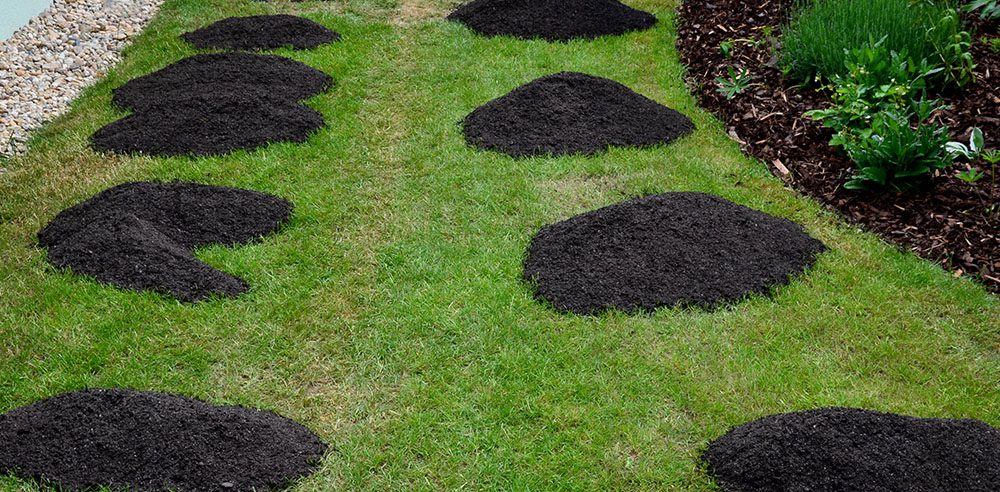
Before you start reseeding, it helps to sprinkle a layer of fresh soil! Royal City Nursery carries a few different bagged soils suitable for lawns. Use your rake to spread the soil evenly across the landscape, smoothing out all the lumps and bumps.
Viva Lawn Repair Mix is specifically pH balanced for seeding and sodding. It has a slightly higher sand content, which makes it lighter—perfect for new grass roots to penetrate easily.
Gro-Max is another great soil for seeding and sodding lawns, and we just started carrying it at the garden centre this year. It’s a peat-free formula, so it’s sustainably harvested and eco-friendly!
Reseeding
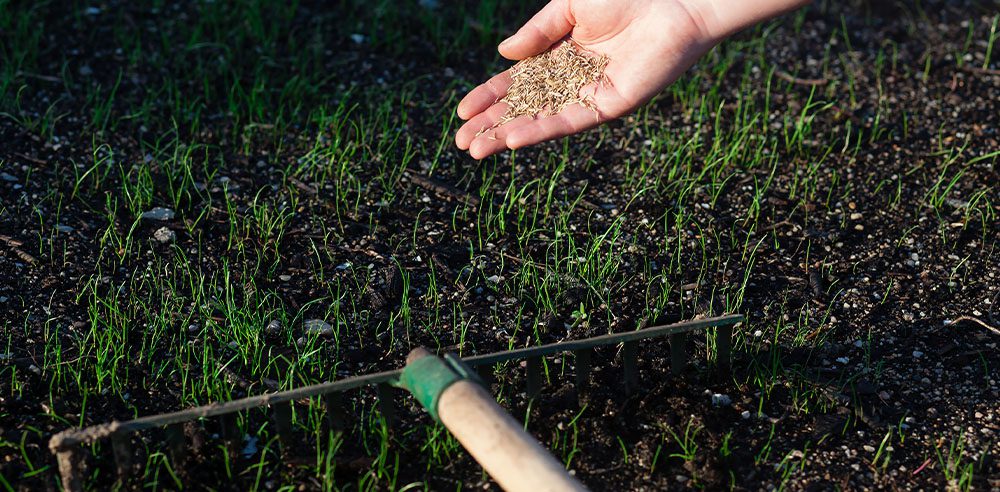
Once you spread the soil and the lawn is ready for reseeding, you can evaluate the terrain and identify any problem areas that need extra seed. If your yard is shady, we have a great seed blend suitable for shade. If you’ve got a sunny lawn, you’ll have three options for sun-loving grasses. There’s a ryegrass blend—a hardy, reliable option. Then there’s a low-growing type called Enviro Eco-Lawn, and another mix called Deluxe Overseed that contains just a little bit of Kentucky bluegrass. All three of these options work great if your lawn gets a lot of sun!
While a little bit of Kentucky bluegrass in a seed blend is okay, Tanya suggests avoiding seed blends with high volumes of it.
“We’re not a big fan of using a lot of Kentucky bluegrass in the lawn because that’s the one that grubs love. It also doesn’t like heat. When we’re talking about that crunchy grass in July, Kentucky bluegrass generally tends to brown out first in the summer months.”
If you’d like to switch to a clover lawn, you can tear up all the old grass and replace it entirely or spread a layer of clover seed into the existing grass. Clover is hardy and low-maintenance; grubs and other pests hate it, but it provides a food source for bees and butterflies! It’s pretty low-growing, and you don’t have to mow it. However, if it’s incorporated with your lawn grass and you decide to mow, you’ll still have a nice, thick, evenly green lawn.
Fertilizing
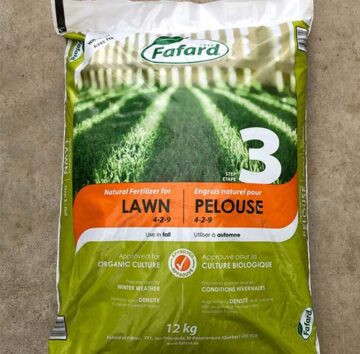
Once you spread the seed, you’re good to go ahead with fertilizing! Tanya recommends using a formula with lower nitrogen, higher phosphorus, and potassium.
Nitrogen stimulates leaf production, but that’s not what we want in the fall. Phosphorus will help boost root growth, which is important when we’re gearing up for a cold winter, and potassium will support overall plant health.
“We want to drive that root structure because we want to make the plant more drought-resistant, more disease-tolerant, and more insect-resistant. So next year, again, there’s less brown, crunchy grass. That’s the goal!”
We recommend fertilizing once in spring, again in summer, and one final time in fall, but Tanya says the fall application is the most important. Royal City Nursery carries a 3-step system that makes it easy—each step is formulated for the season in which you apply it. If you didn’t get the 3-step system this year, you can snag some in spring 2023!
Watering
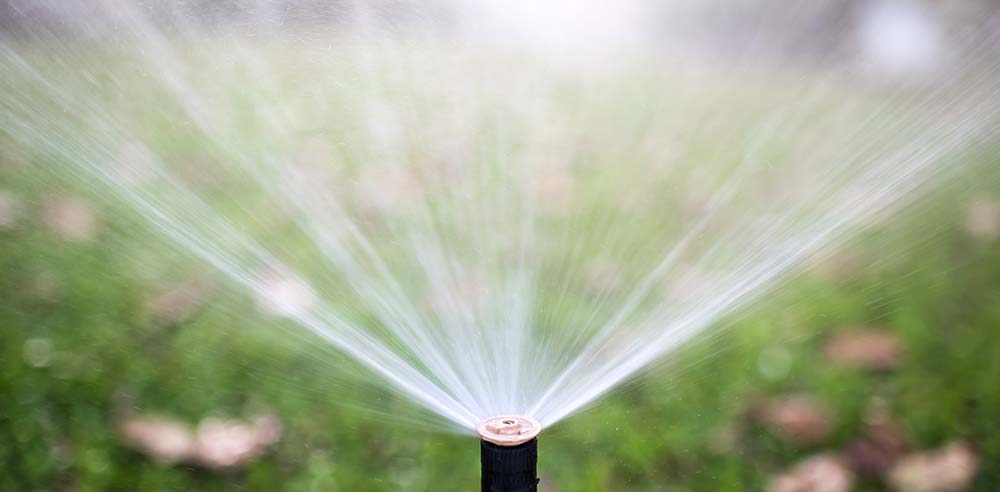
Water is essential when you’re reseeding and fertilizing! Luckily, in the fall, we can expect some more rainfall. Guelph has also moved into the “Level 1 Yellow” zone for outdoor water use restrictions. In summer, when we were in “Level 2 Red,” lawn watering was not permitted. Now, you can water on alternating days from 7:00–9:00 am and 7:00–9:00 pm. If your street address is an even number, you can water on even-numbered calendar days, while odd street numbers can water on odd calendar days.
Grass seed typically needs daily watering until it starts sprouting. Since we have limitations on when we can water, if the weather is particularly dry and hot, it’s a good idea to water in the morning and the evening of your designated watering days.
The Final Cut
Many folks will insist on cutting your grass super short in the fall before the snow falls, but Tanya recommends against this. Your grass is a full plant, after all, and hacking off most of its foliage won’t do much good! Ideally, you’ll want to cut it to about 3–3.5 inches high.
Keep an eye on when the forecast calls for snow—if your grass is still growing after you cut it and reaches 4–5 inches, that’s too much grass to leave behind over winter. The snow will compact that grass, getting heavy and wet with poor air circulation—a recipe for fungus!
If you have any questions regarding all the different fall lawn care steps in Guelph, stop by Royal City Nursery to speak with Tanya and our team of garden and landscape experts. We’re happy to guide you through the process and recommend products that suit your space, budget, and style.