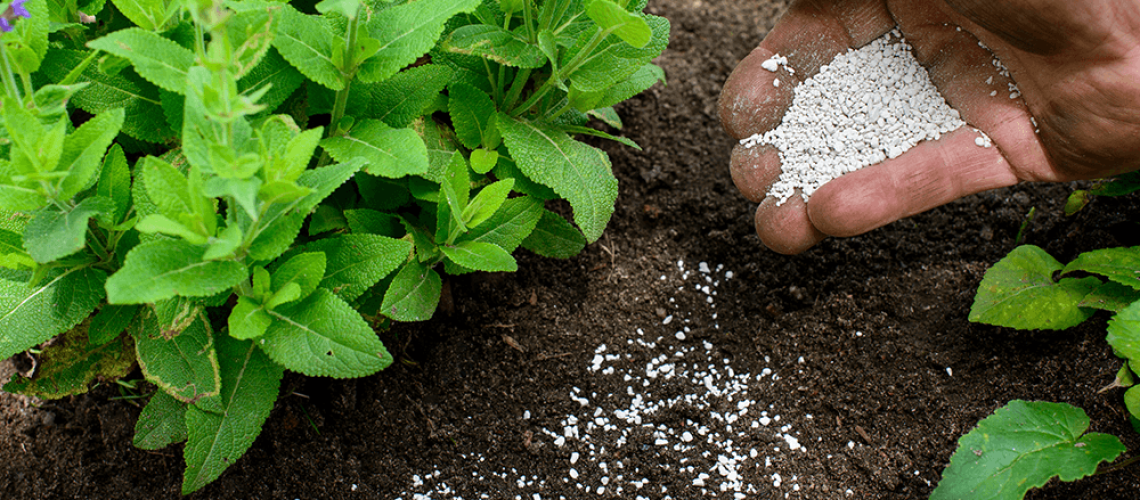
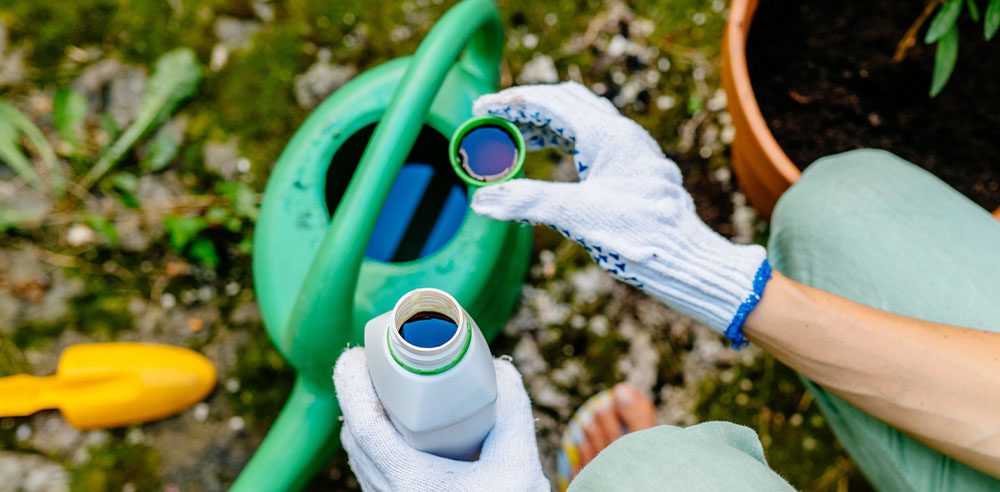
Every plant owner knows it’s essential to provide your plants with water, sunlight, and soil, but many don’t recognize the importance of fertilizer. Regular applications of fertilizer will make a world of difference in the health and growth of your plants, and it’s especially necessary for potted indoor plants. Here are some fast facts about fertilizer so that you can understand how to use it safely and why it’s so necessary.
The Three Main Components of Fertilizer
Every fertilizer package will have three numbers on the package, like 2-14-0 or 8-4-5; this is called the N-P-K ratio, and it represents the ratio of nitrogen (N), phosphorus (P), and potassium (K). Each of these chemicals contribute to healthy growth up, down and all around—nitrogen is for green leaves (upward growth), phosphorus is for root and flower production (downward growth), and potassium is for disease resistance and health (all around growth).
Nitrogen stimulates leaf growth, phosphorus stimulates root and flower growth, and potassium supports essential functions like nutrient and water uptake. It’s important to pay attention to the N-P-K ratio of your chosen formula because if you use the wrong formula on a specific plant, you’ll scramble its growth processes. For example, if you supply a tomato plant with a formula high in nitrogen but low in phosphorus, you get plenty of leaves but no fruit.
You’ll get the best results if you use a formula specifically tailored to certain types of plants. There are fertilizers for annuals and perennials, vegetables, tropical houseplants, citrus trees, and turf grass (lawn)! Using tailored, organic fertilizers will guarantee that your plants are getting the right nutrition for healthy growth.
When to Fertilize Your Plants
Most plants go into a dormant state in winter, like hibernation, where growth slows or stops altogether and energy is conserved for their upcoming spring growth spurt. If you fertilize your plants in late fall or winter, this will disrupt their natural cycles and confuse the plant. Their growth spurt will occur before they’ve had enough time to build up the energy, and growth will be weak and spindly.
Fertilizing at the start of spring will help boost your plants’ growth at the correct time, and follow-up applications will keep them on the right track until fall. Some plants, like vegetables and container-grown annuals, require more fertilizer than other plants, so feel free to ask our in-store experts how often you should fertilize your chosen plants.
Chemical Vs. Organic Fertilizers
Chemical, or synthetic fertilizers, are concentrated formulas that give your plants a big boost of nutrients. However, problems occur when these formulas are overused—the phosphorus, in particular, has contributed to contaminated groundwater, which hurts our aquatic ecosystems. Organic fertilizers are naturally sourced and don’t run the risk of hurting our environment, so many gardeners and Royal City Nursery choose these formulas instead.
The Best Fertilizer for Indoor Plants
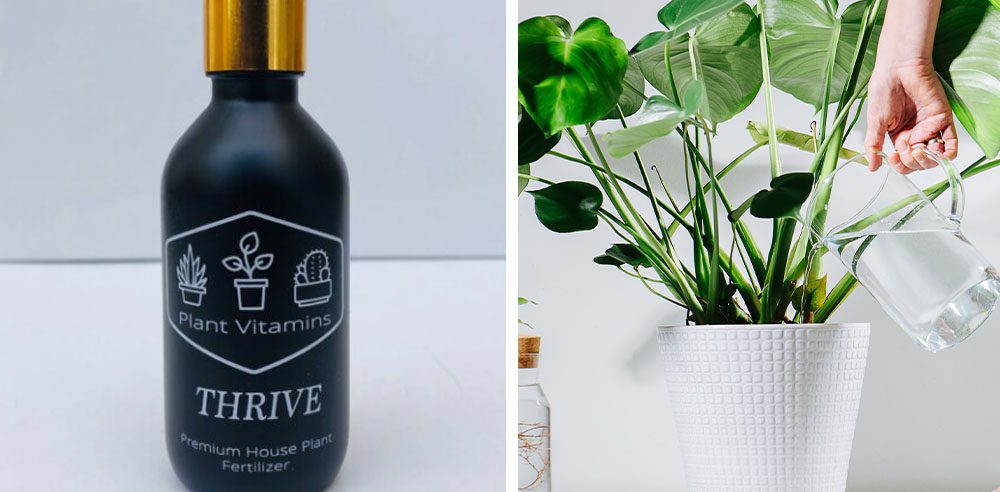
Thrive by Plant Vitamins is our favourite fertilizer for indoor plants—it comes in an easy-to-use dropper for mixing into water. It’s made from 100% organic seaweed, and on top of containing the necessary nitrogen, phosphorus, and potassium, it contains over 60 minerals, nutrients, and active growth hormones. It’s ethically sourced, and one small bottle is enough to make 120 litres of liquid fertilizer. Plus, it’s far less stinky than fish emulsion, so it’s great to use indoors!
On the hunt for fertilizers near Guelph? Royal City Nursery has a wide assortment of options for outdoor garden beds, container gardens, landscape plants like shrubs and trees, and indoor houseplants. Visit us soon to stock up in time for spring!