
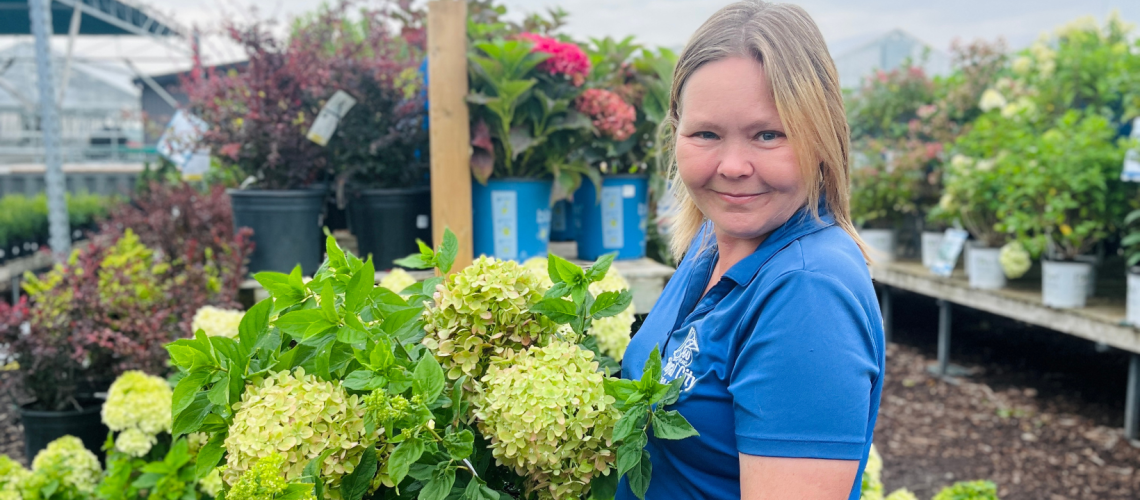
July is Hydrangea season—alongside beach days and watermelon, of course! For many gardeners, this iconic bloom defines the month. From coast to coast, Hydrangeas flourish across Canadian gardens: ocean-blue and bubble-gum-pink mopheads light up Vancouver, while fluffy white blooms of Hydrangea arborescens bring to mind the picket fences of Anne of Green Gables in Prince Edward Island.
Hydrangea arborescens, or Smooth-leaf Hydrangea, has a history of use in traditional medicine, including among some Indigenous communities and within Chinese herbal practices. It was believed to act as a natural diuretic when used in small amounts to help flush the system. However, it’s important to note that most Hydrangea species are now considered toxic if ingested by people or pets. If you have curious pets that like to nibble, we recommend skipping Hydrangeas in your garden—check out our “Grow This Instead” section for pet-friendly alternatives.
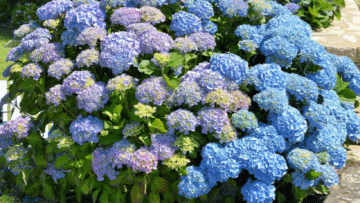
Hydrangeas have long held a place in the gardener’s heart. They first appeared in European gardens in the mid-1500s, brought back by explorers from North America and Asia. Breeding efforts soon followed, giving rise to heirloom varieties that still bloom in gardens today.
With so many different types of Hydrangeas available, it’s hard to imagine a garden that couldn’t accommodate at least one. Yet, many visitors to the garden centre and clients I meet during consultations hesitate to include them in their garden plans. Why? Because Hydrangeas often cause anxiety – mostly due to uncertainty about how to care for them and a reputation for being high maintenance.
During my time growing for a commercial nursery, Hydrangeas were one of my largest crops – tens of thousands, in fact, by the end of my career. And I can tell you, not all Hydrangeas are created equal. Some are truly high maintenance, while others are surprisingly easygoing, despite being just as complex. I’m excited to share some of the tips and tricks I’ve picked up over the years to help make growing Hydrangeas a breeze in your garden.
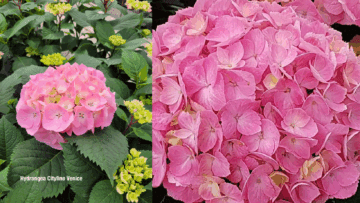
Shopping Tip: Hydrangeas sold around Easter or Mother’s Day—especially those found inside stores – are usually floral Hydrangeas. These are often not winter-hardy, though many Canadian growers are beginning to shift toward more resilient varieties. If you bring one home, remove any decorative foil right away, place it in bright, indirect light, and keep the soil consistently moist. While it’s always worth trying to plant them outdoors, keep in mind they’re a bit like fall mums – they may not survive the winter.
Designer Tip: Choose the right Hydrangea for your space. While there’s almost always room for a Hydrangea in the garden, not every Hydrangea will thrive in every spot. These plants generally fall into three size categories: dwarf varieties (12″ to 3′), mid-sized (4–6′), and full-sized (8–10′). Be sure to measure your space – height, width, and depth – and read plant tags carefully for size, light requirements, and hardiness.
If you’re researching varieties online, stick to Canadian sources when possible, or check where the website is based. Hardiness zones vary from country to country. As a general guideline, if you’re viewing U.S. information, add one to the USDA zone listed. For example, the new Fairytrail Bride Cascade Hydrangea from Proven Winners is listed as USDA Zone 5–9, which would translate to Zones 6–10 in Canada.
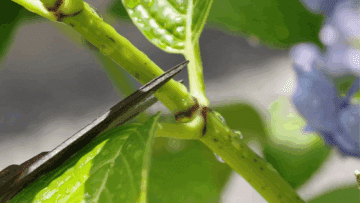
Landscaper Tip: While specific pruning guidelines for each type of Hydrangea are covered in the next sections, it’s important to remember that proper pruning is essential for all woody plants, including shrubs and trees. A helpful rule of thumb? Follow the 4 Ds: prune any branch that is Dead, Diseased, Damaged, or growing in an undesirable Direction. These can be removed at any time of year.
Always use sharp, clean secateurs, and make your cuts at a 45° angle to prevent water from sitting on the cut surface and causing rot. And remember – never remove more than one-third of the total plant volume in a single growing season to avoid stressing the plant.
Light & Location:
Hydrangeas look their best when planted in a spot that gets morning sun and afternoon shade. While they enjoy sunlight, they’re not fans of intense heat. In full sun, it’s common to see them droop around 2 – 2:30 PM – not necessarily from thirst, but from heat stress. If your Hydrangea looks like it’s “fainting,” it often doesn’t need a deep soak – a light misting is enough to revive it.
Smart Watering Tips:
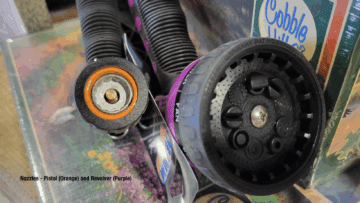
You don’t need a fancy hose attachment, but we do recommend using a nozzle with multiple spray settings (we carry a purple revolver-style nozzle in-store!). If your nozzle only has one setting (like the orange one we also stock), try turning your water tap halfway and stand 3–4 feet back. Aim the spray upward so it falls gently, like rainfall – mimicking the natural water droplets plants prefer.
Stop by the garden centre if you’d like a quick demo – we’re always happy to help!
The Myth of the “Thirsty” Hydrangea:
Contrary to popular belief, most Hydrangeas don’t like sitting in soggy soil. While some varieties can tolerate wetter conditions, the majority prefer consistent – not constant – moisture. At home, I water my established Hydrangeas every Wednesday morning (easy to remember thanks to “Water Wednesday!”). Morning watering is ideal, but I adjust the schedule if:
When in Doubt, Don’t Prune:
One of the most common reasons Hydrangeas fail to bloom is inappropriate pruning. At Royal City Nursery, we often see customers with lush green plants and no flowers – because pruning was done at the wrong time.
Some Hydrangeas bloom on old wood, some on new wood, and some on both. If you cut at the wrong time, you could be removing all the future flower buds. Other reasons for lack of blooms include the age of the plant (many take up to 3 years to mature), or frost/winter damage to buds.
Native to Eastern North America, Hydrangea arborescens thrives in woodland settings and is known for its white, snowball-like blooms. Heirloom varieties like ‘White Dome’ produce soft, greenish-white umbel-shaped flowers, while newer cultivars such as ‘Incrediball’ offer larger, rounder blooms on sturdier stems. This species is exceptionally tolerant of poor soil and thrives in dappled shade – making it perfect under trees like serviceberry, locust, or even near a black walnut canopy. While it does sucker freely, it can be maintained with pruning or used effectively as a natural hedge.
When to Prune:
These Hydrangeas bloom on new wood. Prune in mid-February to March in Southern Ontario for best results. With leaves off, it’s easier to assess the shape, and pruning promotes strong new growth. I cut my ‘White Dome’ to about 2’ – it still screens my deck step and reaches 4’ by summer. You can prune as low as 1’ depending on your goals. Deadhead regularly through summer, stopping mid-August to leave dried blooms for winter interest.
Favourite Varieties:
‘Annabelle’, ‘Incrediball’, and ‘Flowerfull’
One of the most shade-tolerant Hydrangeas, Hydrangea quercifolia is native to the Southeastern U.S. and offers year-round interest. Its oak-shaped leaves turn rich burgundy and purple in fall, and its exfoliating bark adds winter charm. Creamy white cone-shaped flowers fade to soft pinks and beiges. While beautiful, Oakleaf Hydrangeas need just the right balance of moisture – consistently damp but never waterlogged – which can make them tricky to establish.
Soil Tip:
Poor soil? Amend it! For sandy soils, we love BioSoil (with seaweed and shrimp shells to boost water retention and structure). For clay, go with BioFor, which includes peat and composted bark to improve drainage. Never add sand to clay – it can create a cement-like texture.
When to Prune:
Blooms on old wood, so prune just after flowering – typically mid to late August. This plant looks best when left to grow naturally, so choose a location where it can reach full size without needing constant trimming.
Favourite Varieties:
‘Gatsby Girl’ (white to rosy pink, 6–8’), ‘Munchkin’ (compact, 2–3’)
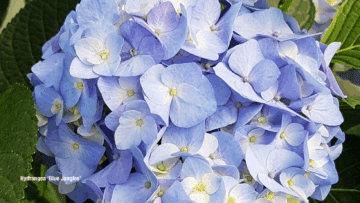
This showstopper is loved for its vibrant pinks, blues, purples, and reds – but it’s also the most high-maintenance Hydrangea. Why? Its flower buds are extremely vulnerable to frost. For reliable blooms in Southern Ontario, these varieties need protection from first to last frost.
Winter Protection Tips:
Wrap in burlap or frost cloth during shoulder seasons, or overwinter using methods like rose huts, plant protectors, or even cardboard Sono-tubes filled with insulating leaves.
When to Prune:
Avoid pruning. Buds form as early as August, and any cut in fall, winter, or spring risks removing all the flowers. If you must prune, stick to dead or damaged branches. For better bloom insurance, try a reblooming variety that flowers on both old and new wood.
Favourite Varieties:
‘Glowing Embers’ (deep red) Rebloomers we recommend: Endless Summer® series or Let’s Dance® ‘Blue Jangles’
Low-Maintenance Alternative:
Hydrangea serrata (Mountain or Lacecap Hydrangea) is better suited to cold climates. Check out the Tuff Stuff™ series – beautiful colour with less hassle.
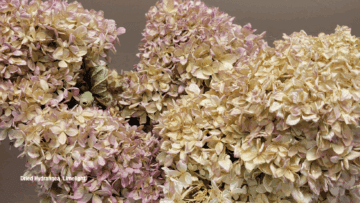
Our top pick for beginner gardeners! Hydrangea paniculata is the toughest, most sun-tolerant, and forgiving of all types. It thrives in hot, sunny spots and offers cone-shaped blooms that evolve in colour—creamy white to blush pink to rich reds. Dried blooms can be brought indoors or left on for winter texture.
When to Prune:
Leave blooms for winter interest, then prune in late winter or early spring before new growth begins. Prune to maintain shape and plant health.
Favourite Varieties:
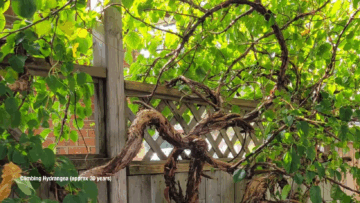
Elegant and enduring, the climbing Hydrangea is a beautiful choice for shady spots. Though slow to establish, it becomes a long-living, show-stopping vine. It can be trained on walls or trellises – or left to sprawl as ground cover. Mature plants feature textured, gnarled bark and a graceful presence that only gets better with age.
When to Prune:
Prune lightly after flowering in late summer (August) to shape or guide growth. Otherwise, minimal pruning is needed—focus on training rather than cutting.
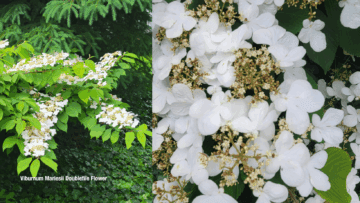
It’s easy to mistake some Viburnums for Hydrangeas – especially when they’re in full bloom.
Viburnum opulus, commonly known as Snowball Viburnum, produces large, white, rounded blooms that resemble the flowers of Smooth-leaf Hydrangea. While beautiful and fragrant, it’s highly susceptible to damage from Viburnum leaf beetle, which can severely defoliate the plant.
A better alternative? Try Viburnum plicatum ‘Mariesii’, or Mariesii Doublefile. Its layered, horizontal branching and lacecap-like blooms often fool gardeners into thinking it’s a Hydrangea – but it’s much less prone to beetle damage. Just keep in mind: these plants are big! They can reach up to 15 feet tall and wide, so they’re best suited to large spaces where they can stretch out and shine.
Hydrangeas have a reputation for being tricky, but they’re not difficult – just misunderstood. The key is getting them properly established. Once settled, they’re surprisingly resilient and rewarding.
Hydrangeas thrive in morning sun and afternoon shade. They love sunlight, but not intense heat. Avoid planting them near heat-reflecting surfaces like concrete, dark vinyl fencing, or composite decking, which can stress the plant.
Give them a slow, deep soak to encourage root development. Set your hose to a trickle and leave it at the base of the shrub for 15–20 minutes, switching sides halfway through. Water when the top 2 inches of soil are dry. To test, move mulch aside and stick your finger into the soil up to the second knuckle – if the soil sticks, no need to water. (Pro tip: test with dry hands for best accuracy.)
At planting time, use Root Rescue – a locally developed mycorrhizal inoculant with 18 species of beneficial fungi. These fungi form a symbiotic relationship with your plant, helping expand the root system for improved water and nutrient uptake. It’s a simple step that makes a big difference. Available in-store and online.
Proper pruning sets the stage for future blooms and healthy growth. Always know what type of Hydrangea you’re working with – some bloom on old wood, others on new, and some on both.
Also, remember the 4 D’s of pruning: remove anything Dead, Diseased, Damaged, or growing in the wrong Direction – anytime.
No flowers? Don’t panic. Many Hydrangeas need time to settle in. If you’ve addressed pruning, sunlight, pests, and watering, it may just be a matter of time. Here’s the general pattern:
Hydrangeas are dramatic – especially in heat. Afternoon drooping isn’t always a cry for water. Often, a light mist on the leaves is all they need to bounce back. Avoid drowning them with buckets of water, which can lead to root rot and even more drooping. Observe first, water second.
My ‘White Dome’ Hydrangeas attract leaf-tier moths every single year. I’ve learned to pinch off the first few puckered leaves and let nature handle the rest. While BTK sprays can be effective, I choose not to spray – because for me, the cost to pollinators isn’t worth it. That said, every gardener has a different threshold. If you choose to spray, do so carefully and responsibly.
Every plant communicates – it just takes time and experience to understand what it’s trying to tell you. Whether you’re a new gardener or a seasoned pro, Hydrangeas can teach you a lot.
Happy planting and enjoy the sunshine!
Kate
About Kate Van Schaik
Kate Van Schaik (Bachelor of Arts & Sciences (B.A.S.) has been growing plants since she was 5 years old. This lifelong passion led to a career in horticulture, spending 15 years growing for a commercial nursery before joining the RCN team as a Landscape Designer in 2022. With a B.A.S. in Forest Science and Geography (University of Guelph), and post diplomas in Ecosystem Restoration (Niagara College) and Landscape Design (University of Guelph), Kate is uniquely qualified to create beautiful and inspiring landscapes that live in harmony with the environment around us.
About Royal City Nursery
Guelph, Ontario’s only third-generation, full-service garden centre! We specialize in creating custom outdoor living spaces and unique solutions for all your garden, landscape, and seasonal decorating needs! At our new greenhouse, located between Guelph and Cambridge, we are the garden centre of choice for discerning homeowners, landscapers, and designers.