

While autumn in Guelph is packed with end-of-season things to do in the garden, we also have to be thinking about what’s going to bloom next year. For me, one of the most rewarding ways to ensure a colourful and vibrant spring garden is by planting spring blooming bulbs in the fall! The great thing about Guelph is that it’s ideal for a wide variety of bulbs, making my guide for bulb planting a must-read for September.
You might think that planting something in the fall for a spring bloom is counterintuitive, but it’s a time-tested practice that takes advantage of nature’s own schedule. When you plant bulbs in the fall, you’re actually giving them a head-start for their spring debut—who knew?
We all know that Guelph gets cold, but this chilly period is so important for many spring-blooming bulbs. During the winter bulbs undergo what’s called vernalization, a process that breaks their dormancy and triggers flowering when the weather warms up in the spring.

Before you start digging, make sure you’re selecting the right bulbs for your garden. The good news is that in Guelph’s climate, a wide range of spring and fall bulbs will thrive. Some popular choices in Ontario, and some of my personal favourites, include:
If it’s instant gratification you’re looking for, though, try putting some autumn crocus into your fall garden now so that they will flower in a couple of weeks. They will produce grass-like leaves in the springtime to add some vibrant green to the landscape—just remember not to weed them out!
When selecting your bulbs, remember to check that they’re firm and free from any mould or damage from storage. Bigger bulbs generally produce larger and more robust flowers, so we think it’s worth investing in some quality Royal City Nursery varieties.

Before you start putting bulbs into the dirt willy-nilly, it’s important to make sure you assess your garden’s soil. You might already know this, but Guelph’s soil can vary a bit depending on where you live and it’s usually going to be a clay or gravel base you’ll be working with. Most spring bulbs prefer a well-draining soil, so if your soil likes to hang onto water, try amending it with compost to improve overall drainage. At Royal City Nursery, we LOVE using hen manure. It’s nutritious for the soil, and does double duty by keeping squirrels away. If you want to try some extra animal repellent when planting bulbs in the ground, we also like Plantskydd to keep bulbs safe.
We also want to make sure when we’re doing our soil prep, we’re mixing the compost and the good soil together and that we’re not layering it. Layering causes pockets so you end up creating a root structure that remains horizontal. When you are ready to plant, choose a sunny or partially shaded spot for your bulbs, as most spring-flowering varieties thrive in these light conditions.

When we think about planting bulbs, we need to remember they have different bloom times, ranging from very early spring into early summer. This means you can plant early flowering bulbs in a normally shady spot because if your shade is created by something like a maple or an oak tree, you actually have a fair amount of sun very early in the season before the leaves have developed. This is a great way to extend your shade garden!
Another thing I like to recommend is to incorporate bulbs like ornamental onions—the alliums—into your vegetable patches because most insects don’t appreciate them. They are also deer and rabbit-resistant. It’s also nice to mix spring bulbs together with other perennials that show later. Plants such as hostas and sedums, with buds emerging from the crown very early in the season, make super complimentary choices because they are slow to emerge in the spring. That way, the perennials will also cover the dying bulb leaves as they grow, doing double duty! For me, the whole reason I really like spring bulbs is because you have the opportunity to extend the flower season in the garden by almost a month.
I also like to keep in mind the overall garden layout when planting my bulbs, so for a more coherent spring garden, think about how tall your mature plants will be, and arrange them accordingly. Alliums tend to grow quite tall, for example, so having these at the back of a border or container garden will make more sense. There’s no hard and fast rules when it comes to planting bulbs though as far as design goes, and the tin soldier look might not work in your garden! Have some fun with bulbs and try different groupings for a really cool and colourful aesthetic.

1. Digging the Hole: Most bulbs should be planted at a depth roughly double their height. For instance, if you have a 2-inch tall crocus bulb, dig a hole 4 to 6 inches deep.
2. Spacing: As a general rule, space bulbs about 2-3 times their width apart, but it can also be nice to play around with clustering your bulbs for a more compact look.
3. Orientation: Most bulbs have a pointed end (the top) and a flat end (the bottom). Plant them with the pointed end facing upward. If you’re unsure about a bulb’s orientation, plant it on its side—it will find its way up! Some bulbs, like Frillalaria, need to be planted on their side to prevent rotting.
4. Soil Prep: Add a layer of organic matter, such as compost, to the bottom of the planting hole. This will provide nutrients and improve soil structure.
5. Fertilization: While bulbs contain enough energy to bloom for the first year, it’s a good idea to fertilize the soil with a bulb-specific fertilizer to support long-term growth.
6. Watering: After planting, water your bulbs thoroughly to settle the soil and encourage root growth. Water sparingly afterward, as overly-wet soil can lead to bulb rot.
Once your bulbs are in the ground, your job isn’t quite finished, and you’ll need to follow some routine care tips for a superior spring show:
Mulch: Remember to apply a layer of mulch to your bulbs to help regulate soil temperature and moisture levels. This is especially important in Guelph, where winters can be fairly harsh.
Don’t Cut Leaves Early: Resist the urge to cut back leaves after the flowers fade as the leaves are busy photosynthesizing and storing energy for next season. The bulbs still need to have their natural course and need to be able to leaf in order to put the energy back into the bulb. Of course, most of us don’t like staring at a bunch of dead leaves, but trust me on this one!
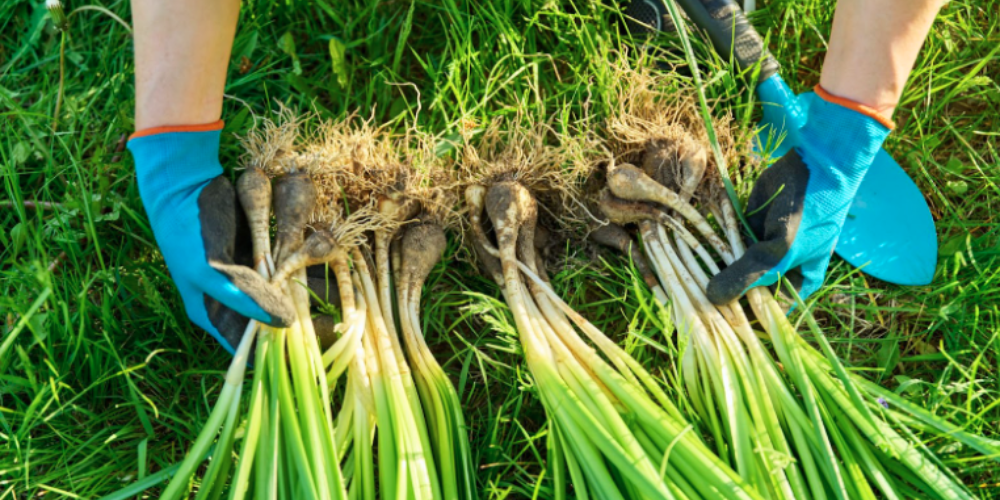
Divide and Replant: Over time, bulbs can multiply and become crowded, to keep your garden vibrant, dig up and divide bulbs every few years and replant them.
Once you’ve planted your bulbs snugly in the ground, I promise that underneath all that Ontario snow they are hard at work preparing for their spring show. I hope this guide for planting bulbs in the fall gets you moving in the garden, but of course, we’d still love to see you at Royal City Nursery to stock up on all the supplies your spring bulbs need to grow their best in Guelph.