August can be a busy time in the Guelph garden, and there are so many things still to do!
Your annuals might be getting ready to retire for the season, but there are some important things for you to do this month to settle your garden in for the change in weather. Here is my list of things you can do in your garden this month to keep things running in tip-top shape.
Watch for Pests: Earwigs, Slugs, Snails, and Grubs
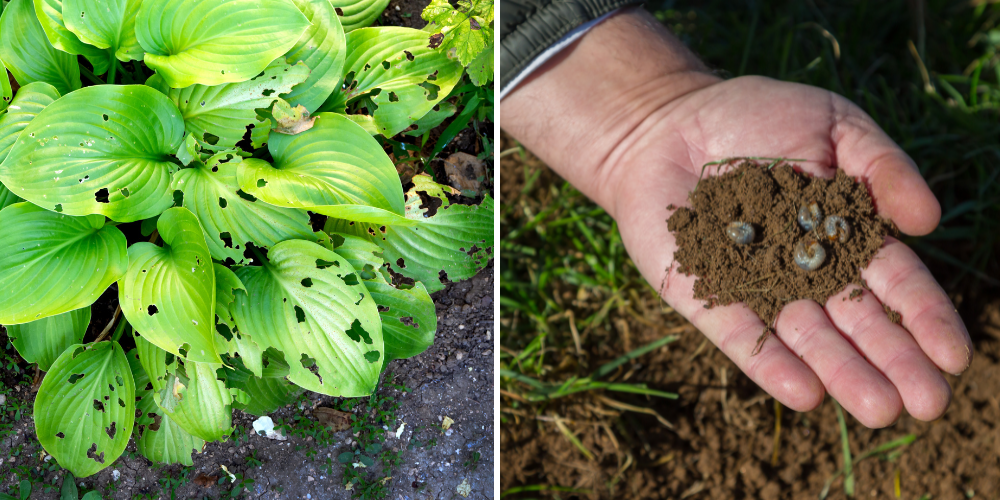
The big thing that everybody’s asking about right now is how to deal with earwigs, and it seems that every earwig known to man has decided to arrive in Guelph this summer. It’s not just earwigs, either, but it’s something a little bit bigger and broader. It’s about all the creepy creatures that come out at night, like the slugs and snails that we don’t see because they’re nocturnal. One of the things we suggest is to make sure that you’re doing your IPM, or Integrated Pest Management. If you’re not sure which pest, you can bring leaves in a ziplock bag and we can identify them for you.
Now is also the time to start watching for grub damage when gardening. If you look at your lawn and you’re starting to see dead spots, or if you tug up on the grass and there are no roots, chances are you’ve got grubs. Your best bet is to flip the grass over, about one square foot at a time, half on a dead spot and half on a live spot, and take a peek for the actual grub itself. Right now, they’re not really doing anything because they haven’t hatched yet. The juveniles from this year have faded and fallen away, and the eggs that need to be hatched won’t hatch until at least the end of August. Once you see those, you can start to figure out what you actively need to do, but it’s definitely something to keep an eye out for.
Leaf Litter
If you’re cleaning up your garden space and find leaf litter, get rid of it, especially if you’ve got leaf litter from disease. Leaf litter are leaves that have fallen off plants. Because it’s been so wet in Guelph, we’re now starting to see a lot more diseases like black spot, rust, and tar spot on maples. Please don’t leave your leaves on your property at this time of year. We want to get them collected and get them out so we’re not putting any more spores on the ground.
Water Your Gardens
According to the powers that be (the weather people), August is supposed to get quite warm for us, which means we have to keep an eye out for disease. It also means that we have to keep in the back of our heads that, at some point, we’re actually going to have to water our gardens. When we’re watering, we need to make sure we water deeply, and we will be watering irregularly, too. The rule of thumb is to water roughly every five to seven days.
When we look at water restrictions, we’ve been very lucky so far, but should they get notched up any more, there is more than enough time within those water restrictions to make sure that we actually can water.
Hold Off on Fertilizing
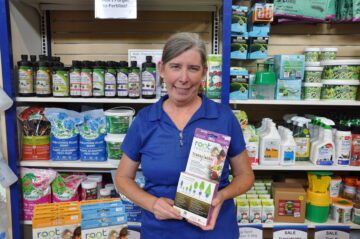
We do not want to fertilize right now unless we are feeding a brand-new planting. New plants should always be fertilized, whether you’re using a plant starter transplanter or a product called Root Rescue that we sell in-store and online. Root Rescue is a mycorrhizal fungus that attaches to the root structures and opens up the cell walls; this increases the ability of the root cells to work and take up nutrients.
If you are fertilizing right now, the one thing you should be paying attention to is anything in a pot. All of the rain we’ve had over the past month is causing the soil to leach nutrients, so anything that’s in a container should be fertilized. Depending on feeding methods, you can try something that is water-soluble, or you can do a granular fertilizer. Either will work, but again, plants in pots should be done as a priority. Anything in the ground—like your trees, shrubs, and perennials—don’t do it right now. You want to wait until at least the middle to tail end of October.
Pruning
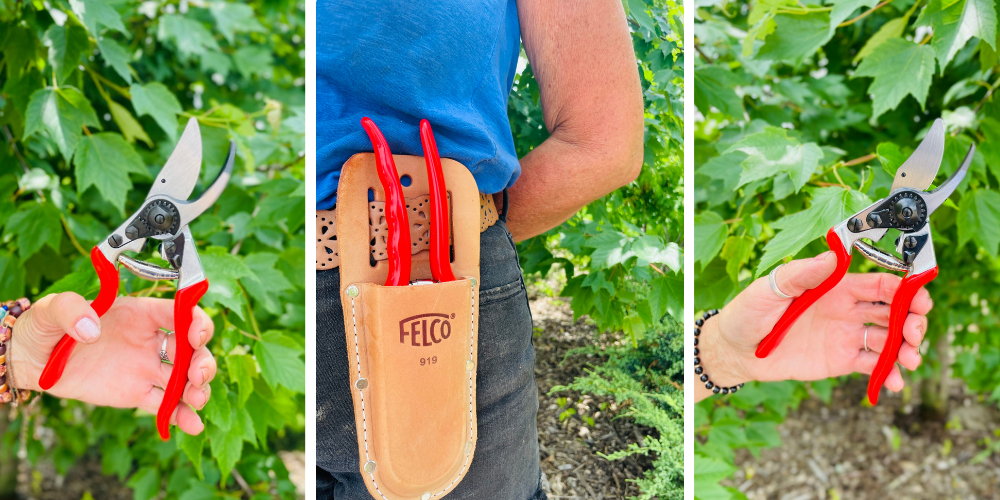
August is also the month that we can start to think about pruning maple trees or pruning things that are notoriously-heavy bleeders. What I mean by “heavy bleeders” is a plant that releases sap freely when you cut a branch off. Normally you want to prune those once you see next year’s buds develop.
Look in the plant’s leaf axil. If you look in the angle in between the leaf stem and the twig, you should start to see next year’s leaf bud emerge. In some plants, like maples, it’s going to be fairly obvious. For other things, like honey locust and oak, the buds are actually buried back in the twigs, so you don’t see them as much. That bud is a really good sign that the treeor shrub is starting to slow down and get ready for the winter. In short—once that bud is pushed, your heavy bleeders can be pruned, which is most commonly going to be the maple for us in Guelph, native or not.
Perennial Care
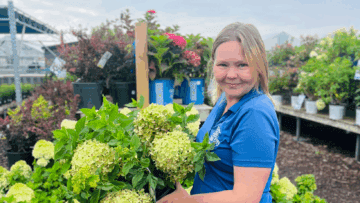
August is also not the month to dig up and transplant your perennials. We’ve been very lucky because there’s been a ton of rain, and that rain has meant we had to check on our transplants a little bit longer than we’re used to. Unless you’re actually home to keep an eye on the plant, you’re better to hold off transplanting until September. If you’re looking to fill holes in the garden, we still have 10” annual pots available that are finished and ready to go—all you have to do is plug them in the ground! We’re also starting to think about fall mums, and that comes near the tail end of August. In terms of flowering in the garden, hydrangeas are still going up, so this gives us an awesome opportunity for texture in the late-summer landscape.
Pond Maintenance
In the pond, you want to make sure you’re ready for algae, which is very similar to pond care in July. You should be using a natural algae control such as D-Solv, or our favourite product Microbe-Lift PL, which adds the bacteria that naturally feeds on algae. Add this once a week or once a month, depending on where you are in the cycle.
Your pond in August, because of the heat, will see a little bit more algae growth, and it’s not until the nights start to get cooler that some of that growth actually slows down.
Late Season Veggies
August is also a great time for your late-season seeds—things like carrots, radishes, and greens. Get those in the ground during the month of August because they don’t like getting too hot. Once the heat dissipates a little bit, we can start our later fall harvest with things like kale.
I love the kale in the garden because it gives you something with some texture and colour when everything else is dropping off. We still had kale growing in our garden in November last year; It just doesn’t like the heat. Kale loves cool temperatures, so it will start better now, and don’t be afraid to buy seeds! We still have a lot of seeds at the garden centre. Not only are we starting the armchair gardening for next year, but you can still do some really cool stuff for this season as well.
Houseplants
Another thing to start thinking about is houseplants’ needs. We’re at least a month out from bringing our houseplants in for the winter, but you want to consider where you’re going to put them when they come back inside. For those of you who are students, now’s the time to think about how you are going to decorate your rooms. We have tropicals for the dorm room in the 4” or 6” pots. You can look for those in store at the end of August, which is timed for the back-to-school season.
If you’re ready for Guelph gardening in August, we have everything you need to make your summer-to-fall transition go smoothly. Whether you need top-notch expertise from me and my team, pest control products, or just some late-season additions to your landscape, come see us today at Royal City Nursery!