
The later into the year we get, the earlier the sun goes down—and I’d wager we’re all feeling it already! Just as daylight savings time can wreak havoc on your body (by the way, it’s November 1st this year, so mark your calendars!), the changing seasons and reduced sunlight triggers many changes for your houseplants.
Believe it or not, your houseplants know what time of year it is, even if they’ve never been outside. For most houseplants, fall and winter are periods of dormancy, during which they rest up and charge their batteries before they start growing again next year. This means the way we care for them during the winter also needs to change, and here’s how.
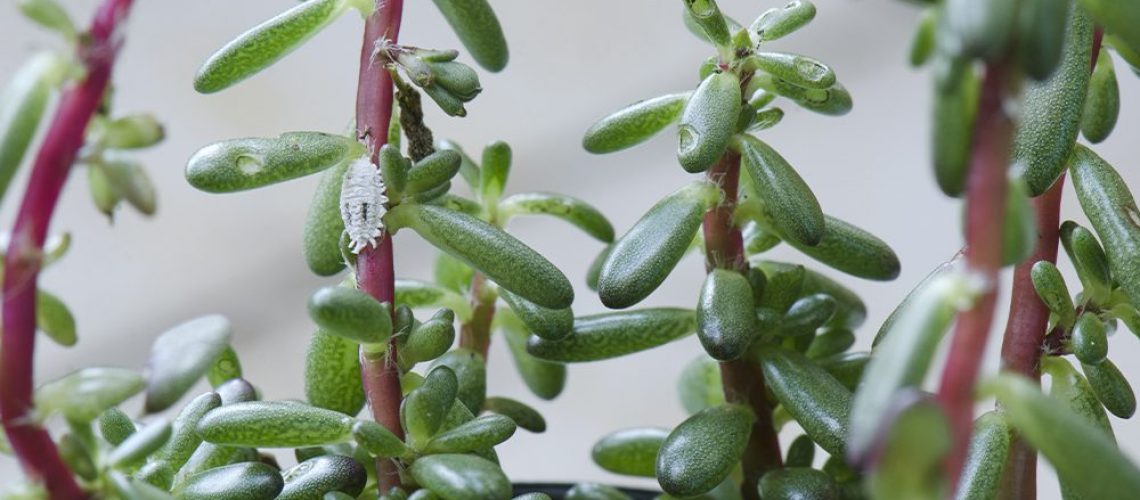
If your plant had a little summer vacation outside this year, be very diligent about pest control when bringing it back inside. (By the way, if you haven’t started bringing your plants in, I suggest doing it today!) Bugs have a tendency to hitch a ride indoors by hiding in the soil, under your plant’s leaves, or burrowing under the soil. So, your first step when bringing your plant back inside is to treat it with insecticidal soap or another gentle pest control product. Then your next step is to quarantine it—yes, even houseplants have to deal with the occasional quarantine.
Keep the plant in a location far away from any of your other houseplants and observe it daily for signs of pest activity. Check the soil for any movement, look under the leaves, and check out the roots if you can do so gently. If you see any bugs that you’re not sure how to deal with, snap some photos or videos and visit us at Royal City Nursery. We’d be happy to take a look and advise you on how to deal with the infestation before your houseplant returns to its rightful place.
Even if your plant hasn’t been outdoors, sometimes pests find a way in. Fall and winter drive a lot of insects indoors, where the air is warm and dry—exactly the way they like it. Watch for fine webbing, which could indicate spider mites, or for tiny flies called fungus gnats that love to nest in houseplant soil.
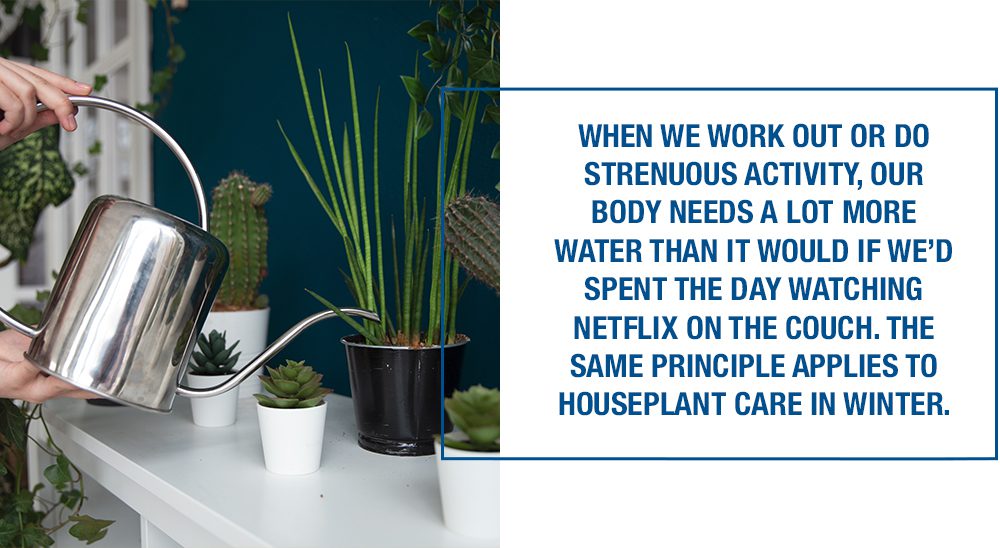
When we work out or do strenuous activity, our body needs a lot more water than it would if we’d spent the day watching Netflix on the couch. The same principle applies to houseplant care in winter.
Plants that aren’t actively growing don’t need nearly as much water, and they generally have no need for fertilizers. Houseplants that you used to water every few days will likely only need to be watered once per week or even less. The plants you normally water every week will likely be satisfied with a good drink once per month.
How do you know when to water? Pay attention to the soil. You’ll notice that the soil will start to take more time to dry out as your plant goes dormant. Rather than watering on a schedule, check the soil every few days for cues that it’s time to water. If the pot feels a little on the light side, or the first few inches of the soil feel bone dry, go ahead and top the water up. However, drainage is more important than ever at this time of year, since a dormant plant is even more vulnerable to root rot. Make sure water can escape the pot freely.
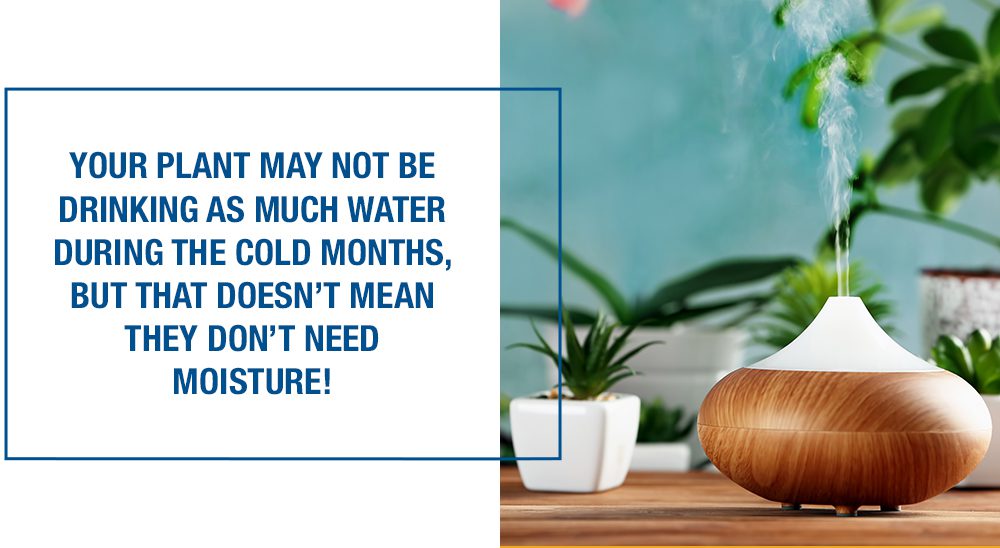
Your plant may not be drinking as much water during the cold months, but that doesn’t mean they don’t need moisture! Most houseplants are tropicals, native to regions with high humidity all year, even during the dormant season. Southern Ontario, as you know, can be prone to wet winters, but indoors where the furnace is blasting, the air is bone dry. Your poor plant can’t seem to catch a break this season!
Fortunately, there are lots of really easy fixes for low humidity. Fix one is to group your houseplants closer together, this actually helps them form a microclimate with higher humidity. However, this alone is not enough. You’ll also want to add humidity to the air, which you can do in one of three ways. One way is to put a humidifier in the room with your plants. Another way is to mist them daily with a spray bottle. The third, and my preferred method, is to place the pots on a shallow sauce covered with a layer of pebbles. Fill the saucer with water so the bottom of the pot is sitting just above the water. As the water evaporates, it will increase the ambient humidity around the plant.
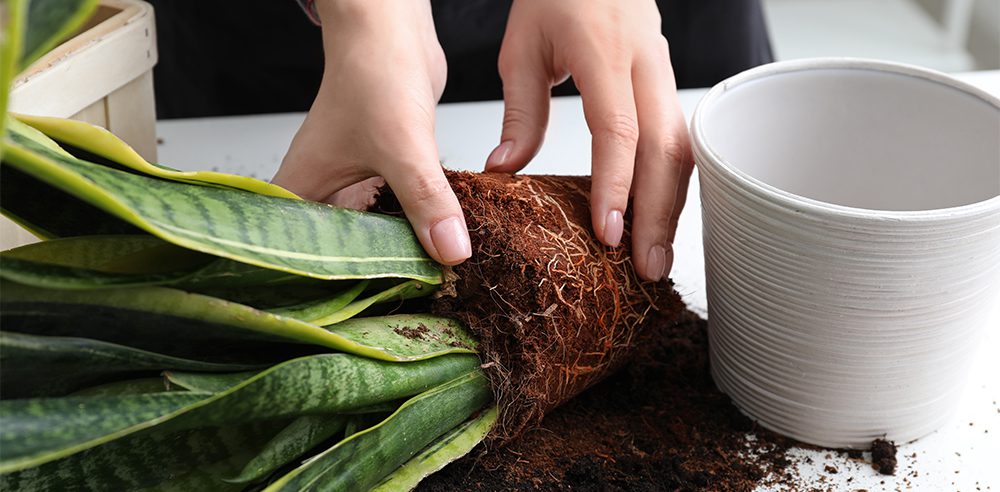
Your plant is entering dormancy, which means now is the perfect time to handle the root ball if you have to. If it’s been a while since you potted your plant, treat it to a top-up of fresh, high-quality soil. Now is also a great time to repot your plants, whether the plant is rootbound and needs to size up (remember to go up just one size at a time!) or you just feel like it needs a fresh new outfit. To do this, water the plant an hour before you move the plant into its new pot. Fill the new pot about a third full with fresh soil, then tilt the old pot and gently slide out the root ball, being careful not to tug the stem. Loosen the roots gently with your fingers and place the plant in the new pot. Backfill with fresh soil, packing it in firmly, and water the soil to help it settle.
Fall and winter houseplant care isn’t especially difficult, but it is a bit of a change in routine from the spring and summer. Remain sensitive to your houseplant’s changing needs, and you’ll enjoy many more seasons together.