

Leaf spots! We’ve all walked into our gardens and seen those dreaded yellow and brown spots on our leaves before, or perhaps you’re just seeing them for the first time and are wondering what on earth they are! Tanya Olsen, third-generation owner of Royal City Nursery and a Professor in the Horticulture Apprenticeship program at Humber College, shares with you some top reasons you may see leaf spot diseases on your plants as well as some tried and tested solutions.
Watch our latest video on youtube to learn more or scroll to continue reading.

Thumbnail image with link to ‘Leaf Spots Explained’ video on our YouTube channel.
Leaf spots are a common plant ailment characterized by discoloured patches or lesions on the foliage. These spots can vary in color, size, and shape and can be caused by a variety of factors, including fungi, bacteria, and environmental conditions.
Sunburn
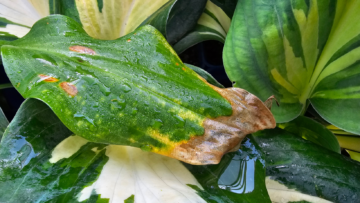
One common issue that can appear as leaf spots is sunburn. For example, Hosta leaves can look brown and see-through due to sunburn. This happens when the leaf, which is lighter in colour and has less chlorophyll, sits in the sun too long and gets burnt. Fortunately, this is nothing to worry about. The simplest solution is to snip off the affected leaves and dispose of them. The Hosta will be fine and continue to grow without any issues.
Rusty Leaves
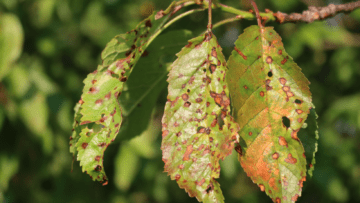
Rust is a living fungal infection that affects the leaves, causing them to look rusty. It is often brought on by high heat and high humidity, which create excess moisture. Some years, rust can appear more frequently due to a higher count of insects whose bites can spread the fungus. What can you do about rust? While the plant itself will generally remain healthy, the leaves can look unsightly and stress the plant. If you notice a few leaves with rust, snip them off and discard them in your waste bin to prevent the disease from spreading. If the rusty leaves drop to the ground, be sure to remove them from your property to ensure it does not spread further. For severe infections, fungicide treatments such as Bordo, which contain sulfur and copper, or Defender by Safer’s can be very effective at controlling the spread of the rusty fungus. In the fall, it’s beneficial to remove fallen leaves to minimize the risk of rust disease reappearing the next season.
Powdery Mildew
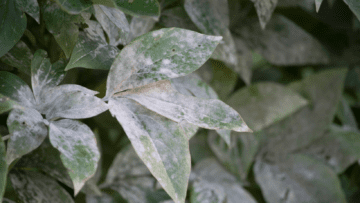
Powdery mildew appears on leaves as a white, powdery substance. It can be rubbed off and is found on the surface of the leaves, not inside the plant. Like rusty leaves, powder based treatments like Bordo or the liquid Ready-To-Use Defender by Safer’s are highly effective and organic, making them safe to use. Another effective method for dealing with powdery mildew on perennials is to cut off the affected leaves and stalks, leaving the plant above ground, and then treat it with a good spray, so the spores don’t jump from the soil back up to the new growth.
Leaf spot diseases can often be managed effectively with the right treatments and care practices. In many cases, once you remove the affected leaves and treat the plant, the disease will not reappear if proper preventive measures are taken. Ensuring good air circulation, avoiding overhead watering, and keeping your garden clean and free of diseased debris can help prevent leaf spot diseases from taking hold.
Leaf spots can be a frustrating problem for gardeners, but with proper identification, treatment, and prevention methods, you can keep your garden healthy and vibrant. Still looking for some answers specific to your situation? We can help! Bring a sample of your affected plant in a zip-lock bag to the garden centre. Our team of experts will help you identify the issue and offer effective solutions.
About Tanya Olsen:
Tanya is a third-generation garden centre owner and landscape designer.
Teaches Horticulture Apprenticeship at Humber College in Ontario, Canada.
Has a weekly segment on CTV news.
Has a Bachelor of Landscape Architecture.
YWCA Woman of Distinction.
About Royal City Nursery:
Guelph, Ontario’s only third-generation, full-service garden centre! We specialize in creating custom outdoor living spaces and unique solutions for all your garden, landscape, and seasonal decorating needs! At our new greenhouse, located between Guelph and Cambridge, we are the garden centre of choice for discerning homeowners, landscapers, and designers.