
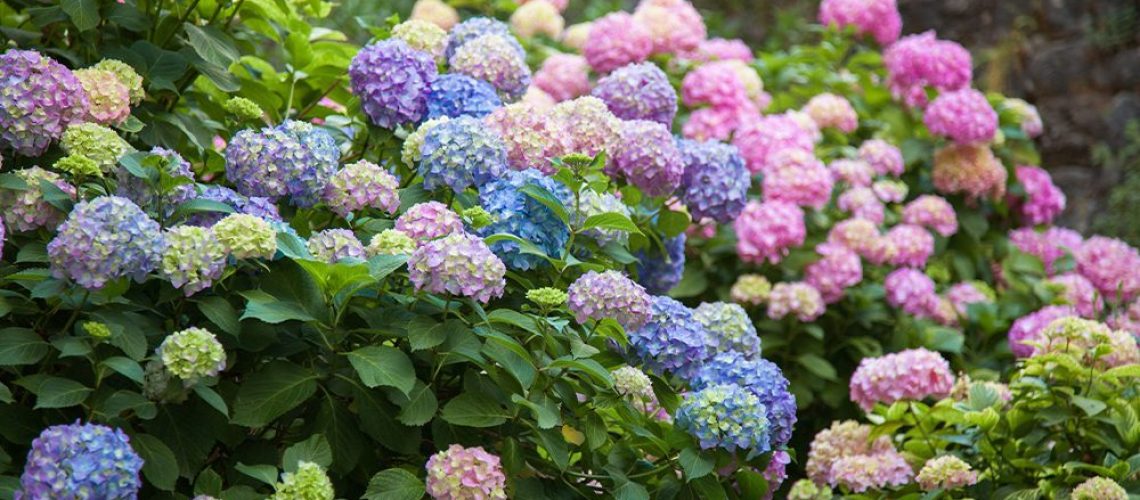
It’s hydrangea season again! Are you loving it as much as I am? It seems like everyone in the world is in love with these fabulous shrubs, and for good reason—there’s no substitute for their incredible flower heads. However, like all plants worth growing, hydrangeas come with their fair share of challenges. Depending on how long you’ve been growing them, some of these issues might be real head-scratchers, so today’s article is all about troubleshooting the most common questions we get about hydrangeas.
A: Foliage problems are the most common issue hydrangea growers report back to us, and unfortunately, there’s not a one-size-fits-all answer. For a specific answer to your foliar concerns, I strongly suggest visiting us in-store with a clipping of the affected leaves sealed in a plastic bag. We’re happy to take a look and diagnose the issue, then recommend the best solution for your shrub. If you don’t have time to make it down right away, here are a few pointers:

A: Those familiar with Latin will recognize the word “hydra” in “hydrangea,” which means “water.” While a well-established hydrangea is pretty drought-tolerant, new shrubs definitely need their water! Give your newer plants a deep soak three times per week, and water well-established plants weekly. (Unless there’s been lots of rain!) A “deep soak” means letting the hose run on the soil for 30 to 45 minutes—you’re aiming to drive water deep into the ground. This will encourage the roots to seek the water deeper into the soil.
A: The answer to this question is unusually complicated when it comes to hydrangeas, because it really depends. Hydrangeas either bloom on old wood, new wood, or both, depending on the variety. Hydrangeas that bloom on old wood need to be pruned immediately after flowering, hydrangeas that bloom on new wood need to be pruned in late winter or early spring, and the ones that bloom on both benefit from a combination of the two. Here’s a quick chart of varieties and their blooming habits:
Bigleaf hydrangea (H. macrophylla) | Blooms on old wood | Prune after flowering |
Bigleaf hydrangea (H. serrata) | Blooms on old wood | Prune after flowering |
Oakleaf hydrangea (H. quercifolia) | Blooms on old wood | Prune after flowering |
Peegee hydrangea (H. paniculata) | Blooms on new wood | Prune in late winter/early spring |
Smooth hydrangea (H. arborescens) | Blooms on new wood | Prune in late winter/early spring |
Climbing hydrangea (H. anomala petiolaris) | Flowers on old vines | Rarely needs pruning, prune only as needed in early spring |
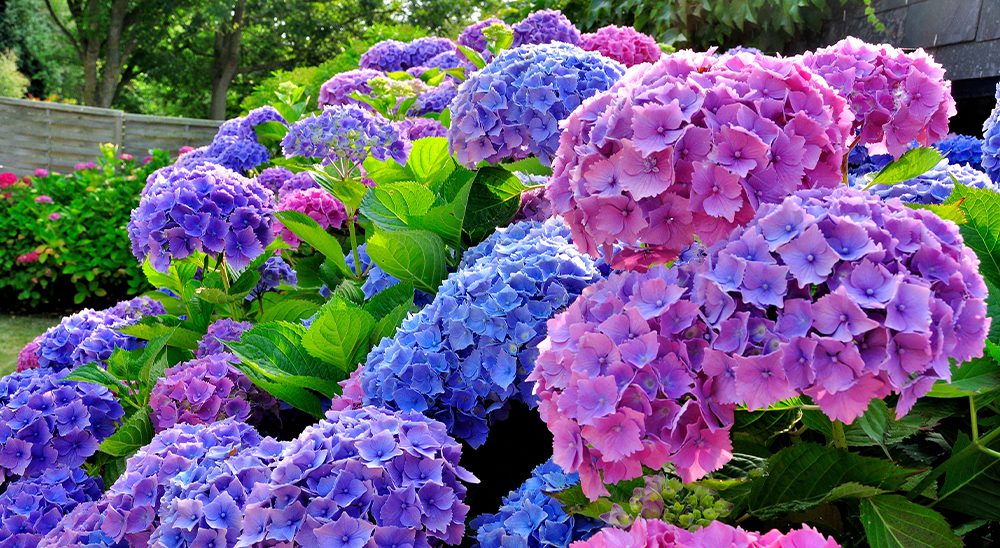
A: Most of the time, a lack of blooms on hydrangeas is due to pruning at the wrong time! Many a well-meaning gardener has accidentally chopped off the next year’s blooms by pruning at the wrong time of year. Another possibility is that the hydrangea is not getting enough sunlight or receiving too much fertilizer or the wrong formula.
A: Hydrangeas love an annual application of compost in the spring and a dose of fertilizer in early fall—I recommend Nutrite Granular Bone Meal or Evolve Organic Rage Plus. The best time to apply fertilizer is on a really beautiful fall day. Usually, in September, we’ll get a few of those perfect days that are not too warm and not too cool—that’s the day to fertilize! It’s also the best day to get your fall bulbs planted and any dividing and transplanting of perennials you might need to do.
A: If your hydrangea is looking really worse for wear, the best thing you can do is remove any dead or dying plant material and give the soil around it a good soak. If the plant is truly suffering, now is not the time to fertilize. Deep watering every few days will be much more helpful. However, if the plant is dying because of an aggressive disease, it’s best to cut your losses and put it out of its misery. You don’t want to keep a diseased plant around your healthy ones for very long!

A: If they look droopy and sad, sure. Use sanitized shears and snip them off, cutting the branch at a 45-degree angle. However, if the flower heads are dead but still standing tall, I like to leave them up. They make great winter interest in the landscape, and you can also save them to add to your fall and winter centrepieces or porch pot arrangements.
A: This fun garden project is only possible for bigleaf (H. macrophylla) varieties, like Endless Summer. But if you want to try it, read our guide on how to make hydrangeas change colours!