

I’ll admit it. I’m more of an outdoor plant girl than an indoor one. My houseplants often suffer a little neglect, then get smothered with too much “love and kindness” before we either reach an understanding, or the plant decides to give up the ghost.
I really do enjoy houseplants, but like many of you, I’ve struggled to find indoor plants that suit a busy lifestyle and the limited light in my home. That’s why I’ve put together some of my best indoor plant care tips along with a list of the hardest houseplants to kill. Perfect for anyone looking to build confidence with their indoor jungle.
Indoor plants can be just as fussy about light as outdoor ones. In the garden, we think of light as full sun, part shade, or shade. Indoors, houseplants are a little more specific. Most tropical plants prefer bright, indirect light which usually means near a window but not in direct sun.
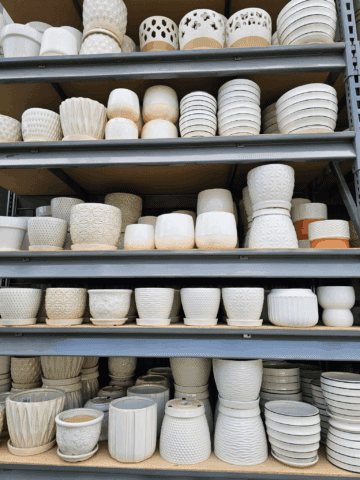
While we don’t recommend transplanting new plants right away, a decorative pot is a great way to hide the grower pot. We carry a wide range of sizes, types and colours – we’re sure to have one that suits your unique style.
As we head into cooler nights, now is a great time to transition your tropical plants that decorated your porch and deck to an inside location. It’s strongly recommended to keep your “traveling” plants separate from any that are currently indoors for at least a 2 week period. This will allow you to assess them for any fungal and/or pest problems and reduce the chance of the problems spreading to your permanent residents.
Through endless trials and errors I’ve found that the following plants are ones that thrive with a decent amount of neglect and prefer low light conditions.
They are super easy going and brighten up a space with their bright green leaves with white margins. While they prefer bright, indirect light they can handle being in a slightly shady spot, especially during the summer months. Listed as being non-toxic to pets, they do hold some hallucinogenic properties (similar to those experienced with catnip) so monitor the tips of the leaves as my cat Mayday, loves to nibble. Spider plants are also known for their air-purifying properties as well as their versatility as a traditional houseplant, a lovely addition to planters as well as their use in a garden setting. Being easily propagated through harvesting of their “spiderettes”, these flexible plants make great gifts and additions to outdoor garden spaces.
Sometimes plants need to move around. I often find that with most of my plants, I have the greatest success when they get rearranged and moved to take advantage of the best light conditions throughout the year. This is the corner of my foyer where it gets bright but indirect light (It’s favourite kind of light especially in the summer), during the winter it gets moved to in front of a picture window to maximize its sun exposure but is less likely to suffer from the heat during the cloudy months of January and February. Don’t be afraid to move things however be sure to check on them to see how they are doing and make any additional adjustments to make sure they are happy in their new spot.
With their sword-like leaves banded in greens, yellows and cream they bring height and interest to every living space. While they prefer light conditions similar to the Spiderplant (bright, indirect) they can take a shadier spot but will be much slower growing. An 1989 study completed by NASA showed these plants to be great purifiers removing toxins and allergens in the air. While their benefits to humans are notable, they can be mildly toxic to pets so make sure that these are kept out of reach of curious and hungry dogs and cats. Snake plants also require monthly dusting to allow their leaves to breathe.
You Want Me to Do What? – While dusting plants may seem like a weird concept, it actually makes a lot of sense if you stop and think about it. Plants that live in outdoor spaces usually benefit from rainfall or a shower from the hose not only in terms of watering but also in terms of cleanliness. Plant leaves are prone to collect dirt, dust and other debris especially if they are smooth and curved. This fine layer of dust can clog pores (which isn’t good for anyone) which ultimately affects the plant’s ability to respire and photosynthesize. Using a damp cloth, dust your leaves at least once a month. Remember to support the leaves, use gentle pressure and clean both sides of the leaves.
With their unique leafing structure and growth habit is sure to make this low-maintenance plant stand out in any room. A tough plant that can survive almost all light conditions but prefers the mid-ground (bright indirect light). If the plant gets too much shade, it will start to become “leggy” (Less leaves more stem) as it searches for more light. This can be easily corrected by relocating it to another location or offering additional light through grow lights. Living up to its alias of the Eternity plant, its only true weakness is overwatering so make sure to let the soil dry out completely before watering. Please note this plant is toxic to humans and pets if ingested so keep away from curious kitties, pups and roommates.
Kill Them with Kindness – Most plant deaths in our experience are usually attributed to improper watering. Most plants, including the ones in your garden, perform better in conditions that allow for the soil to dry out in between waterings. Few plants enjoy wet feet or can take long periods of extended damp which is why things tend to struggle as much during times of perceived flood as they do during drought. While the natural response is to give water when you notice a plant is not thriving this might actually make the whole situation worse. Create a watering schedule once you get used to watering your plants (every 3 weeks, once a month, etc) – keeping in mind that as the seasons change your watering might need to be adjusted as well depending on light levels and overall activity of the plant. Always check to see if your plant needs water. This can be done by either popping the plant out of the pot if size allows or by sticking your finger into the soil. Our expert staff can give you advice on when and how to properly water your plants as some prefer to soak in the tub and others prefer a shower.
Their beautiful heart-shaped foliage comes in shades of green but can also be found in hues of gold and yellow tones – Golden Pothos is one of my favourites as it brings light to any corner. It’s uncommon to find a plant that will thrive in fluorescent lighting but Pothos will – making it perfect for offices and other areas where they might be the dominant light source. Its leaves will droop slightly when it’s in need of water so it can sometimes be used as an indicator to check other plants as well. Can be toxic to pets if ingested so great as a hanging plant to avoid temptation.
Some Plants Just Like Tight Pants – While sweats might be your lounge wear of choice, plants often prefer leggings so to speak. For instance, Pothos and Snake Plants will continue to push out new growth the more root bound they are. So do some research before you plant them up into a larger pot. A general rule of thumb is to one increase by one pot size at a time -going from a 4” pot into a 6” pot is a more gradual step then the leap from a 4” to an 8”. It’s time to change your pot when you see a negative effect on overall growth, roots that are popping out of the surface of the soil or from the drainage holes or plants that are drying out too quickly (indicates that there are more roots than media left in the pot). We can help with repotting your houseplants, either through providing guidance on how to repot, which soil and pot is best to use for your current plant or completing this service for you in store. *For more information on this service please call or come into the store for more details.
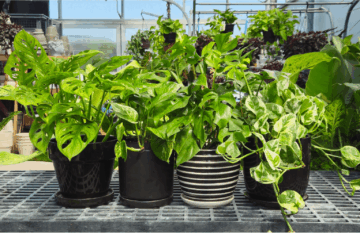
If you have floor space and a large pot – Monstera might be the plant for you. While it can be a bit wild looking, this climber is super easy to care for, requiring similar conditions to those mentioned above. However, it’s often found that if you want more leaf-splits (part of its uniqueness where it gets its common name of Swiss Cheese plant) you need to provide more light. As it’s a climber we suggest a moss pole or bamboo stake for it to grow up but it will also produce its own aerial roots that seek out humidity that they grow up as well. Toxic to pets and roommates if ingested.
Plants can’t grow on love alone – We love Rage Plus for a number of reasons but mostly because it has applications for both indoor and outdoor plants. We also carry a houseplant specific fertilizer that works well. Both are available in a liquid concentrate and are really easy to mix in with your watering. Fertilizing should be completed every month during a plant’s growing season or when new leaves are being produced. More is not better when it comes to fertilizer so be sure to follow the instructions on the back of any package.
There might be some that are still skeptical of their growing ability or if they have appropriate light levels for a plant. To this I say “You can do it but ever-lasting (Fake) plants have come a very long way since the 80s and 90s.” They look far more realistic in both materials used and how they are constructed. Additional materials such as pebbles and a decorative pot can also hide the fact it isn’t a real plant as you can easily cover up the fact that there is no soil in the pot. The lowest of maintenance – just be sure to give it a quick dust when you see cobwebs. We offer a wide variety of these beauties ranging from lemon trees to snake plants to tiny succulents. We promise – no one’s going to know and we won’t tell.
Take care and enjoy the sunshine,
-Kate
https://www.youtube.com/watch?v=didhyZcB9k8&list=PLiEXs8lXV-yqpkrVzUNqiv_EvLlvoW6qd&index=3
About Kate Van Schaik
Kate Van Schaik (Bachelor of Arts & Sciences (B.A.S.) has been growing plants since she was 5 years old. This lifelong passion led to a career in horticulture, spending 15 years growing for a commercial nursery before joining the RCN team as a Landscape Designer in 2022. With a B.A.S. in Forest Science and Geography (University of Guelph), and post diplomas in Ecosystem Restoration (Niagara College) and Landscape Design (University of Guelph), Kate is uniquely qualified to create beautiful and inspiring landscapes that live in harmony with the environment around us.
About Royal City Nursery
Guelph, Ontario’s only third-generation, full-service garden centre! We specialize in creating custom outdoor living spaces and unique solutions for all your garden, landscape, and seasonal decorating needs! At our new greenhouse, located between Guelph and Cambridge, we are the garden centre of choice for discerning homeowners, landscapers, and designers.