
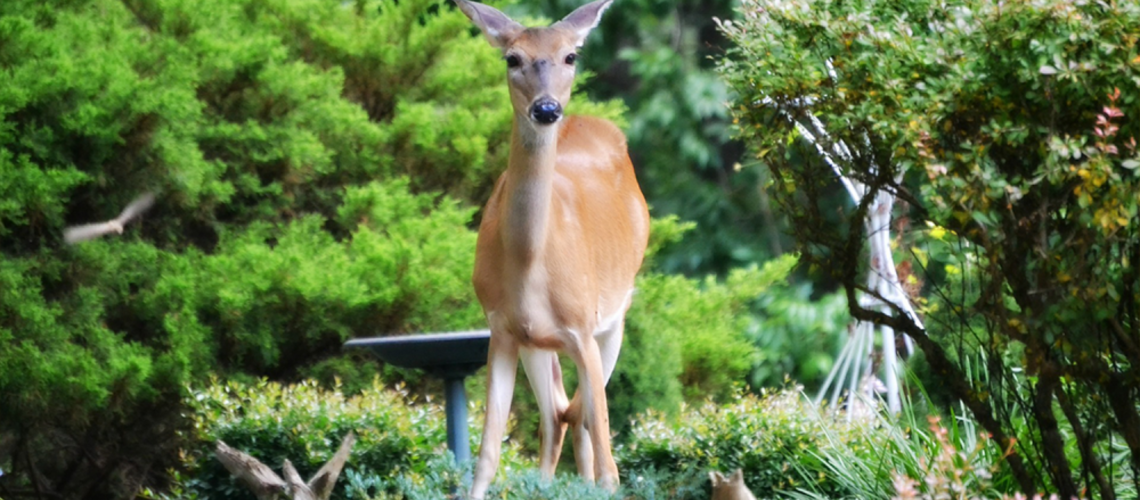
As the snow disappears and the first true signs of spring emerge in the garden, you may start to notice damage on your trees and shrubs from the winter months. In many cases, rodents are to blame! Tanya Olsen, third-generation owner of Royal City Nursery and Professor in the Horticulture Apprenticeship program at Humber College, explains what rodent damage typically looks like, why it’s important to inspect branches for specific signs, and what steps to take next—whether that means treating the damage or determining if the plant can be saved.
Check out our YouTube video on ‘How to Handle Rodent Damage on Trees and Shrubs’ – (5 minute watch) or scroll to continue reading.

To identify wildlife damage on your branches, start by examining the base. Look for distinct “gnaw” marks—where they’re located can reveal the culprit.
Knowing the source of the damage can help you choose the best way to protect your trees and shrubs in the future.
The vascular system lies just beneath the bark, which acts as a protective barrier, shielding these vital “veins” from damage. These veins transport nutrients and water up and down the branch, keeping the plant healthy and thriving. When the vascular system is disrupted—whether by pests, disease, or physical damage—nutrient flow is interrupted, leading to stress, dieback, or even death of the branch. This is why protecting the vascular system is crucial for the health of your trees and shrubs.
The white layer you often see beneath the bark is called cambium, which is essentially dead tissue. When rodents chew down to the cambium, it means the vital vein system has been damaged. If the gnawing is vertical along the branch, it’s usually not too concerning—the rodents haven’t destroyed the entire vascular system, so the branch can often survive.
The real problem arises when rodents chew all the way around the branch—a full 360-degree girdle. This severs the vascular system completely, cutting off the flow of nutrients and water. From this point upward, the branch is effectively dead, even if it appears otherwise.
You might still see buds on a branch that’s been chewed to death, but this is only temporary. In the fall and winter, plants store energy beneath the bark. The buds you see are using up that stored energy. Once it’s depleted, the branch will stop flowering, and leaves and buds will eventually drop off.
In spring, there’s not much you can do about the damage yet—just wait it out. When the time comes, you’ll need to prune your tree or shrub back to below the gnaw marks—around 6-7 inches below the damage. Some plants, like pussywillows, can recover from this, while others, like Japanese Maples, Magnolias, fruit trees, berry bushes, and burning bushes, may not.
If you see bare white tissue around the damage, or if the trunk has been completely chewed all the way around, unfortunately, your tree or shrub is unlikely to recover. In that case, your best option is to remove it and consider planting a replacement.
To protect your trees and shrubs from future damage, make a note to visit the store during Thanksgiving weekend to pick up two key products: Bobbex or Plantskydd. These repellents deter rodents, making them less likely to gnaw on your branches. Apply the spray in November or early December, then reapply in early January for continued protection.
While it’s unfortunate when a tree or shrub can’t recover from severe rodent damage, it’s a learning experience. Fortunately, we have products and solutions to help prevent this from happening again. Our expert team is always available to answer any questions you may have!
About Tanya Olsen:
Tanya is a third-generation garden centre owner and landscape designer.
Teaches Horticulture Apprenticeship at Humber College in Ontario, Canada.
Has a weekly segment on CTV news.
Has a Bachelor of Landscape Architecture.
YWCA Woman of Distinction.
About Royal City Nursery:
Guelph, Ontario’s only third-generation, full-service garden centre! We specialize in creating custom outdoor living spaces and unique solutions for all your garden, landscape, and seasonal decorating needs! At our new greenhouse, located between Guelph and Cambridge, we are the garden centre of choice for discerning homeowners, landscapers, and designers.