

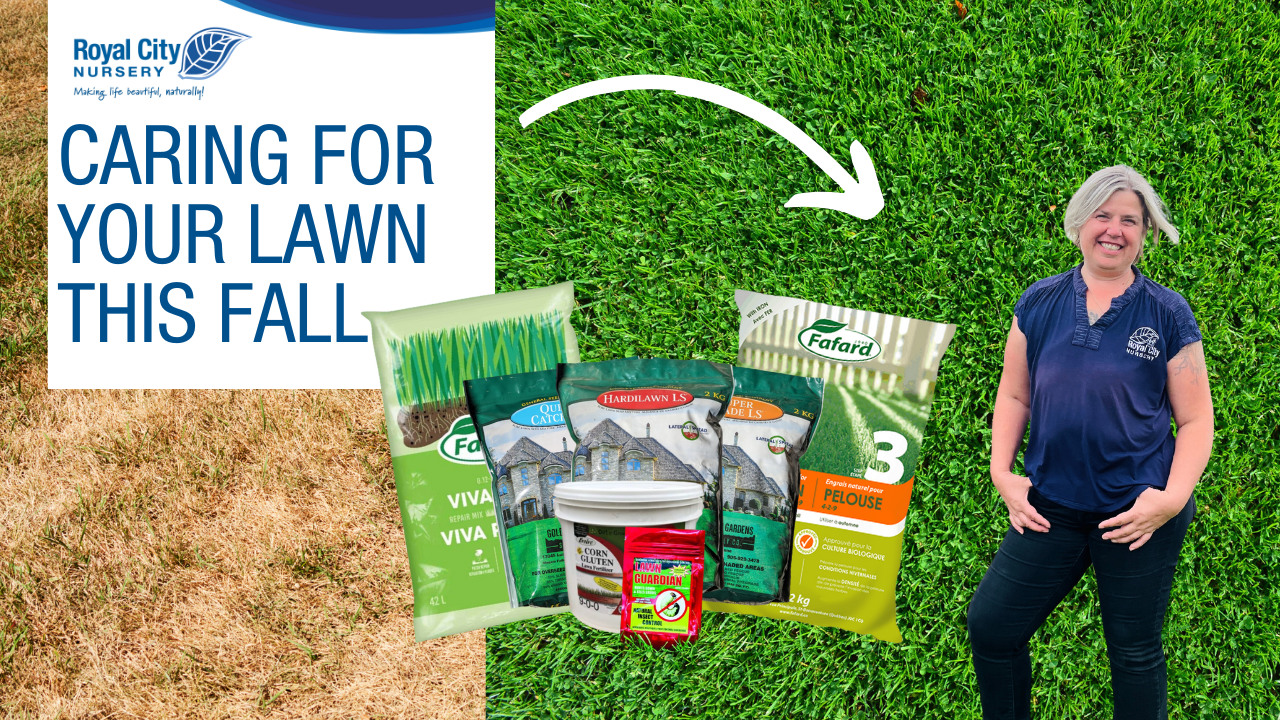
The Complete Guide to Fall Lawn Care in Southern Ontario
A lush, resilient lawn doesn’t happen by accident. It’s the result of seasonal care tailored to our local climate. In Southern Ontario, fall (late August through October) is the most important season for lawn maintenance. What you do now determines how healthy, green, and weed-resistant your turf will look next spring.
At Royal City Nursery, we recommend focusing on four essential pillars of fall lawn care: fertilizing, seeding, insect management, and exploring alternatives like clover lawns.
Fall fertilization helps your grass prepare for winter dormancy and ensures a stronger comeback in spring.
Corn Gluten (Pre-Emergent Weed Control): Corn gluten acts as both a mild fertilizer and a natural pre-emergent weed suppressant. When applied in early September, it coats weed seeds such as crabgrass, dandelions, and clover, preventing them from germinating next spring.
Important: Corn gluten does not distinguish between weed seeds and grass seed. If you plan to overseed, avoid applying corn gluten until spring.
Traditional Fall Fertilizers:
For lawns with fewer weed issues, use a balanced fall blend such as a 4-2-9 fertilizer. The numbers correspond to:
In fall, the priority is root development and resilience, not rapid top growth. Look for a formula with a slightly higher last number, potassium. Apply anytime in September.
If your lawn is thinning or patchy, fall is the ideal time to overseed. Cooler nights, morning dew, and more frequent rainfall provide excellent germination conditions.
Choosing the Right Seed Blend
Application Tips
Grubs, the larvae of June beetles and Japanese beetles, feed on grass roots, causing brown patches and turf that lifts easily.
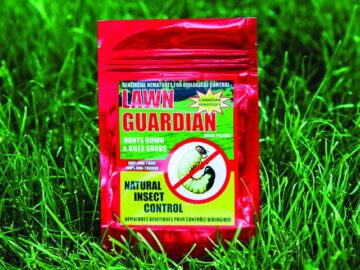
The most effective and eco-friendly control is beneficial nematodes, microscopic organisms that parasitize grubs.
If you’ve had recurring grub damage, consider overseeding with a Hardy Lawn Mix, which grubs find unpalatable.
For homeowners seeking a low-maintenance, eco-friendly alternative, white clover makes an excellent groundcover.
When is the best time to fertilize in fall?
September is ideal. Apply before the first frost for best results.
Can I seed and apply corn gluten together?
No. Corn gluten prevents all seeds, including grass seed, from germinating. Choose one or the other.
How much seed do I need?
Approximately 1 lb covers 200 to 400 sq. ft., depending on whether you’re starting fresh or overseeding.
Do nematodes really work on grubs?
Yes. When applied properly with consistent moisture, nematodes are highly effective at controlling white grubs.
Fall lawn care sets the stage for a greener, healthier yard next year. By fertilizing wisely, overseeding with the right blends, managing grubs, and exploring alternatives like clover, you’ll enjoy a lawn that’s resilient, low-maintenance, and beautiful.
Visit Royal City Nursery in Guelph for expert advice, region-specific seed blends, organic fertilizers, nematode kits, and everything you need for fall lawn care. Our team is always happy to help you make your lawn the envy of the neighbourhood.
Tanya is a third-generation garden centre owner and landscape designer. Teaches in the Horticulture Apprenticeship Program at Humber College in Ontario, Canada. Has a weekly segment on CTV news. Has a Bachelor of Landscape Architecture. YWCA Woman of Distinction.